








Lithium-ion batteries come in all shapes and sizes, but in recent years the 18650 cylindrical format has emerged as the most widely used. Measuring 18mm in diameter and 65mm long, these versatile cells strike the perfect balance between performance, compatibility, and safety. Their immense popularity extends across countless industries and applications — but why exactly have 18650 batteries conquered global battery demand? As a professional 18650 battery pack manufacturer, I will help you find it out!
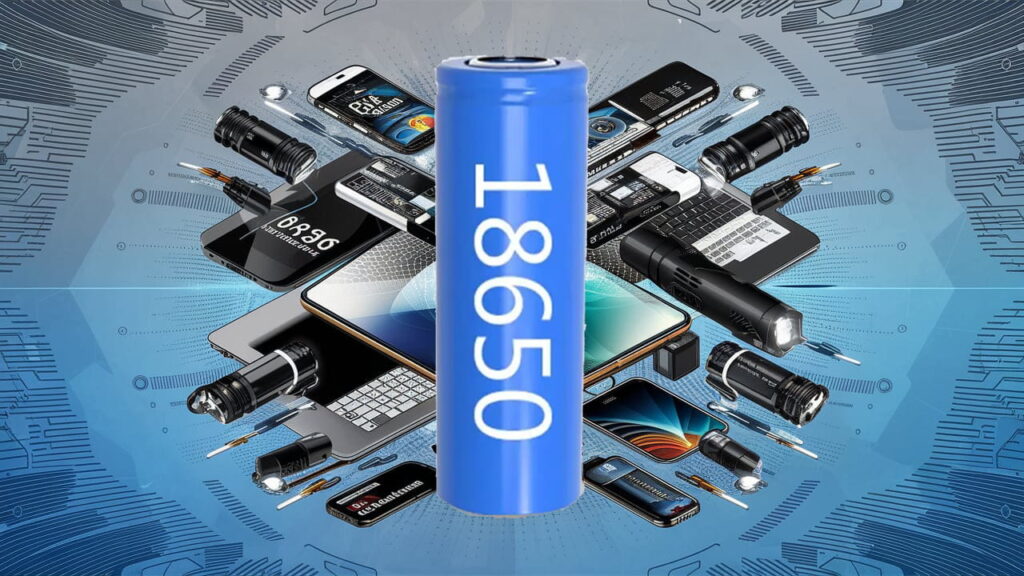
Why Are 18650 Batteries So Popular?
High Energy Density Unlocks Extended Runtimes
The foremost reason 18650 batteries reign supreme lies in their exceptional energy density. Compared to legacy battery types, these lithium-ion cells offer vastly higher capacity relative to their compact size. A quality 18650 can store anywhere from 1,800mAh to a mammoth 3,500mAh of charge. Even mid-range cells exceeding 2,600mAh are common nowadays.
This abundance of capacity enables a broad spectrum of runtime-critical applications. Handheld flashlights can sustain powerful beams for hours of continuous use. Laptops work reliably off-grid while photographers capture thousands of images on a single charge. 18650’s industry-leading density provides the foundation for products and systems that stay powered longer.
And capacity levels continue climbing year after year — 3,700mAh cells emerged recently while 4,000mAh doesn’t seem far behind. Even well-established formats like the trusty AA struggle to reach 2,900mAh. For applications where weight and space come at a premium, 18650 provides vastly superior longevity.
Recharging Repeatedly Without Compromise
In addition to high density, 18650 shines thanks to exceptional rechargeability. Quality cells easily withstand 500 complete charge cycles while still retaining 80% or more of original capacity. And thanks to advanced materials and sophisticated charging algorithms, modern batteries push well beyond 500 cycles before degradation becomes noticeable.
This longevity allows 18650-powered devices to endure years of reliable service at a fraction of the replacement cost of single-use cells. Once the initial investment into a charger and reusable cells is justified, runtime becomes practically free for the lifespan of each pack. Their minimal self-discharge also ensures cells stay prepped for prompt action even after months on the shelf.
Combine this robust charging capacity with class-leading density, and 18650 presents an immensely reusable format for everything from power-hungry electronics to massive electric vehicle battery banks to remote site backup systems counted on in life or death scenarios.
Compatibility Convenience Across All Platforms
The universal dimensions and voltage curves of 18650 have created a highly interchangeable standard present across many industries. Cells share common diameter and length regardless of specific capacity, current rating, or composition allowing flexible mixing and matching without modification. Any quality 18650 clicks seamlessly into integrations scaled from single-cell builds to complex multi-parallel arrangements.
Open compatibility lets consumers conveniently swap new cells into existing devices instead of replacing entire units. Standard cylindrical geometry also lends itself well to packaging in external protective cases when used outside native applications. This modular nature helps extend service lifetime of 18650-powered investments considerably.
Manufacturers also appreciate the design flexibility and supply chain advantages inherent with universally interchangeable cells. Sourcing options stay open across vendors while leaving ample room for next-generation upgrades and tech refreshes down the road. Building around an established interoperable platform like 18650 reduces development risk overall.
Safety First Through Strict Standards
Given their portable nature and likelihood of mishandling in everyday devices, the safety record of 18650 and underlying chemistry hold paramount importance. Beneath the seeming commodity status of these packs lies an interlocking set of guidelines managing every facet of their design, testing, transportation and integration.
Cells face intensive abuse testing scenarios including crush tests, short circuit simulations, excessive charge levels, and more. Passing key benchmarks like IEC62133 provides confidence that 18650 batteries remain stable in suboptimal real world events. Responsible vendors also voluntarily submit cells for independent verification through bodies like UL for further accountability.
Smart charging standards add protection by maintaining cells within defined voltage limits for safe operation. They also compensate for variables like temperature and discharge rates to maximize cycle longevity. Safety oriented circuitry keeps packs viable years longer compared to free-charging predecessors.
While no complex electrochemical system comes absolutely risk-free, 18650 continues to set the benchmark for consumer-facing lithium-ion safety overall.
In Summary
The winning combination of abundant energy, extensive reusability, universal compatibility, and proven safety cement 18650 as the definitive lithium-ion format poised for enduring popularity across essentially every application. Their unmatched efficiency empowers devices to reach farther while reducing waste in the process. As the world pushes towards increasingly sustainable technology infrastructure, expect 18650 to stand tall as a foundational pillar enabling that progress.