







Learning how to spot weld lithium battery packs is an essential skill if you want to build your own custom battery packs. In this comprehensive guide, as a professional lithium battery packs manufacturer, I’ll walk you through everything you need to know, from choosing the right equipment to mastering welding technique.
Why Learn to Spot Weld Batteries?
Being able to spot weld battery cells together opens up a world of possibilities. You can build custom battery packs for all kinds of projects, like:
- Electric vehicles
- Solar generators
- Power tools
- Drones and RC vehicles
- Laptop battery replacements
- Portable power banks
Building your own packs allows you to fully customize the voltage, capacity, size and shape. And it saves you money compared to buying pre-made battery packs.
Spot welding creates strong bonds between battery cells without damaging them. Simply soldering or bolting battery cells together is unsafe and can cause failures or fires. Proper spot welding is a must!
Equipment You’ll Need
To get started welding battery packs at home, you’ll need to get your hands on this essential gear:
Battery Spot Welder
The spot welder itself is obviously key. You’ll want a model that’s designed to handle the high current draw required for welding nickel strips to lithium battery cells.
A typical battery spot welder has:
- Adjustable power settings
- Handheld probes
- Strong, steady welds
- Overheat protection
Low power welders under $100 can technically get the job done but have reliability issues. Serious DIYers should consider investing $200+ in an industrial-grade spot welding machine.
Lithium Battery Cells
You’ll also need lithium-ion battery cells, like 18650, 20700 or 21700 cans. Make sure to buy quality cells from reputable suppliers that are properly rated for high discharge loads.
Poor quality or counterfeit cells won’t perform well and pose serious safety hazards. Stick with top battery brands like Samsung, LG Chem and Panasonic.
Battery Cell Holders
Get battery holders to keep everything aligned and spaced while welding. They ensure consistency between welds. Some spot welders include holders. Or you can buy holders sized for different cell types.
Nickel Strips
Nickel strips connect the batteries cells together. Using pure nickel ensures good conductivity and makes strong welds. Have various strip widths handy for optimal contact area.
Safety Gear
Welding throws sparks and metal bits so wear safety glasses, thick gloves and long sleeves at all times. Work in a ventilated area as welding gives off noxious fumes.
Multimeter
The multimeter is an essential tool for testing connections between cells and verifying voltage of welded packs. Make sure exposed metal is fully covered before using a multimeter to avoid shorts.
How to Spot Weld Battery Packs?
Once you have suitable equipment, you can start fusing cells together into a custom battery pack. Follow these steps:
Plan Your Pack Layout
Figure out the voltage and capacity you need. Then map out how many parallel groups of cells in series this requires. Alignment is critical for balanced current flow.
Prepare Your Workspace
Clear clutter from your workbench and surrounding area. Remove anything flammable. Have your safety gear, welder, and a fire extinguisher within arm’s reach.
Arrange Battery Cells
Place parallel groups into holders with correct polarity. Double check alignment and spacing is consistent. Clean all cell terminals thoroughly with isopropyl alcohol and lint-free cloth.
Cut Nickel Strips
Use sharp scissors or tin snips. Shape strips to overlap all cell terminals in parallel groups. Leave extra length for connecting groups end-to-end and attaching a BMS.
Adjust Welder Settings
Consult your device’s specs to define appropriate power settings. This varies by welder model and strip thickness. Insufficient power = weak welds. Too much power risks damage.
Weld The Batteries
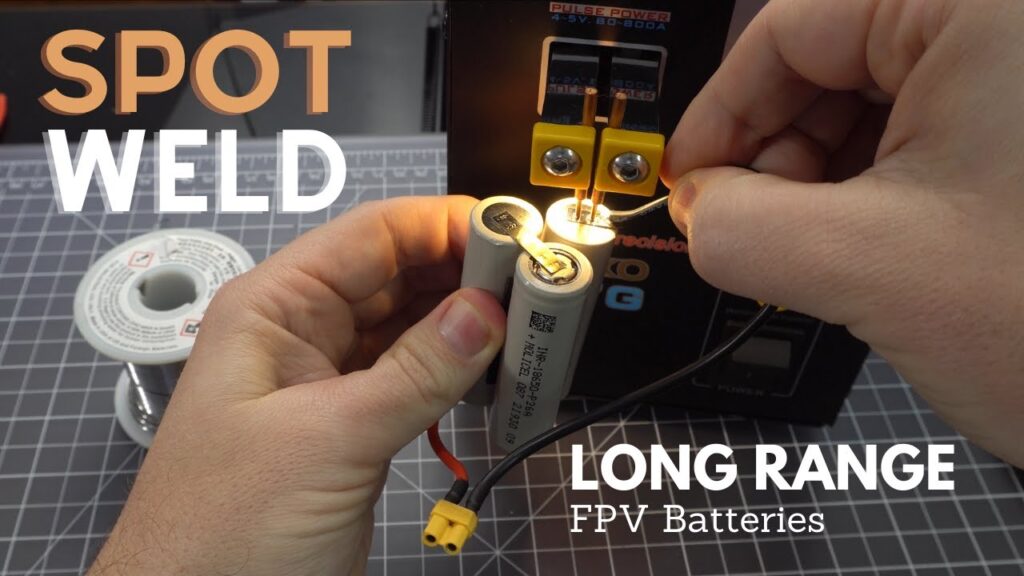
Don safety gear. Position strip over cells and gently lower welder probes on each end. Initiate pulse for 0.3 to 0.8 seconds depending on your machine. A good weld will fuse strip but avoid deep pitting.
Connect Parallel Groups
Repeat welding process to join series connections between parallel groups. Make 2-4 welds per cell terminal for reliability. Stagger welds diagonally across terminals.
Perform Quality Checks
Visually inspect for incomplete joints or burn marks from excessive power. Check voltage and resistance across connections with multimeter. Tug nickel strips to verify solid adhesion.
Install BMS Board
Solder BMS wires to nickel strips or balance tabs on cells. Protect exposed metal with electrical tape or heat shrink tubing to prevent dangerous shorts.
With practice, you’ll get the hang of producing strong reliable battery packs using a spot welder. Start with scrapped cells to dial in your technique before moving onto to expensive new cells. And always make safety the top priority when dealing with lithium battery power.
Spot welding opens up exciting possibilities for taking on all kinds of electrified DIY projects. Once you learn how to build custom battery packs, you can power almost anything imaginable!