







24V Lithium Battery Manufacturer

Custom 24V Lithium Battery Packs for E-Bikes, AGVs, Industrial Equipment & Energy Storage

Custom 24V lithium battery packs engineered for electric mobility, robotics, AGVs, industrial equipment, solar systems, power tools, and OEM applications.

Nuranu Battery designs and manufactures 24V lithium battery packs using lithium-ion/NMC and LiFePO4 cell technologies.

From compact 24V 10Ah and 20Ah battery packs to high-capacity 24V 50Ah, 100Ah and 300Ah+ systems, we customize the electrical configuration, battery capacity, BMS, enclosure, connector, communication interface, and charging requirements around your application.

24V Lithium Battery Solutions for OEM Applications

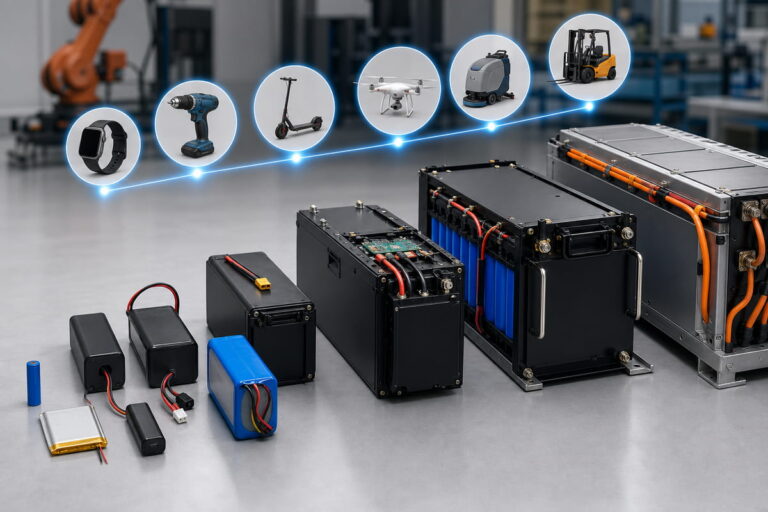
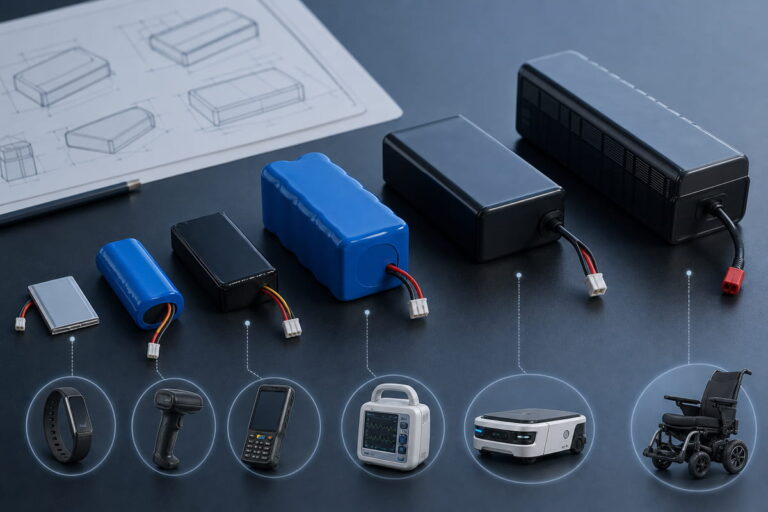
A 24V battery platform is widely used in electric mobility, industrial equipment, automation systems, robotics, portable power equipment, and energy storage.

However, choosing a 24V lithium battery requires more than simply matching the label on the battery.

The complete battery system needs to be matched to:

  • Operating voltage
  • Charging voltage
  • Battery chemistry
  • Capacity
  • Continuous discharge current
  • Peak discharge current
  • Motor or load power
  • BMS protection
  • Operating temperature
  • Available installation space
  • Connector
  • Communication protocol
  • Charging system
  • Certification requirements

Nuranu develops custom battery packs according to these parameters rather than treating every 24V application as the same.

24V Lithium Battery Solutions for OEM Applications

24V vs 25.6V Lithium Battery

What Is the Difference Between 24V and 25.6V?

One of the most important points when sourcing a “24V lithium battery” is understanding that 24V is often an application or system voltage classification, not necessarily the exact nominal voltage of the battery.

For example, a common LiFePO4 configuration for a 24V-class system uses 8 cells in series.

The nominal voltage is approximately:

8 × 3.2V = 25.6V

Therefore, a battery may be marketed as:

  • 24V LiFePO4 battery
  • 25.6V LiFePO4 battery
  • 24V-class lithium battery

These terms can refer to the same general battery platform when the system is designed around an 8S LiFePO4 configuration.

For OEM applications, the correct approach is to confirm:

Nominal Voltage + Operating Voltage Range + Charging Voltage + BMS Configuration

rather than relying only on the “24V” label.

24V vs 25.6V Lithium Battery

24V Lithium Battery Specifications

Nuranu can develop 24V-class battery packs across different capacities and cell configurations.

Battery CapacityApprox. Energy*Typical Application
10Ah240–256WhPortable equipment, compact mobility
20Ah480–512WhE-bikes, scooters, robotics
30Ah720–768WhMobility, industrial equipment
50Ah1,200–1,280WhAGV, marine, backup power
100Ah2,400–2,560WhIndustrial, solar, energy storage
200Ah4,800–5,120WhOff-grid and commercial systems
300Ah+7,200Wh+Large energy-storage applications
CustomCustomOEM / ODM applications
  • Approximate energy is calculated using nominal voltage × rated capacity. Actual usable energy depends on cell chemistry, BMS limits, temperature, discharge conditions, and system design.

Need a different capacity?

We can design a custom 24V battery according to your required:

Voltage + Ah + Wh + Current + Dimensions + Runtime

24V Lithium Battery Specifications

24V LiFePO4 Battery

25.6V LiFePO4 Battery for 24V-Class Systems

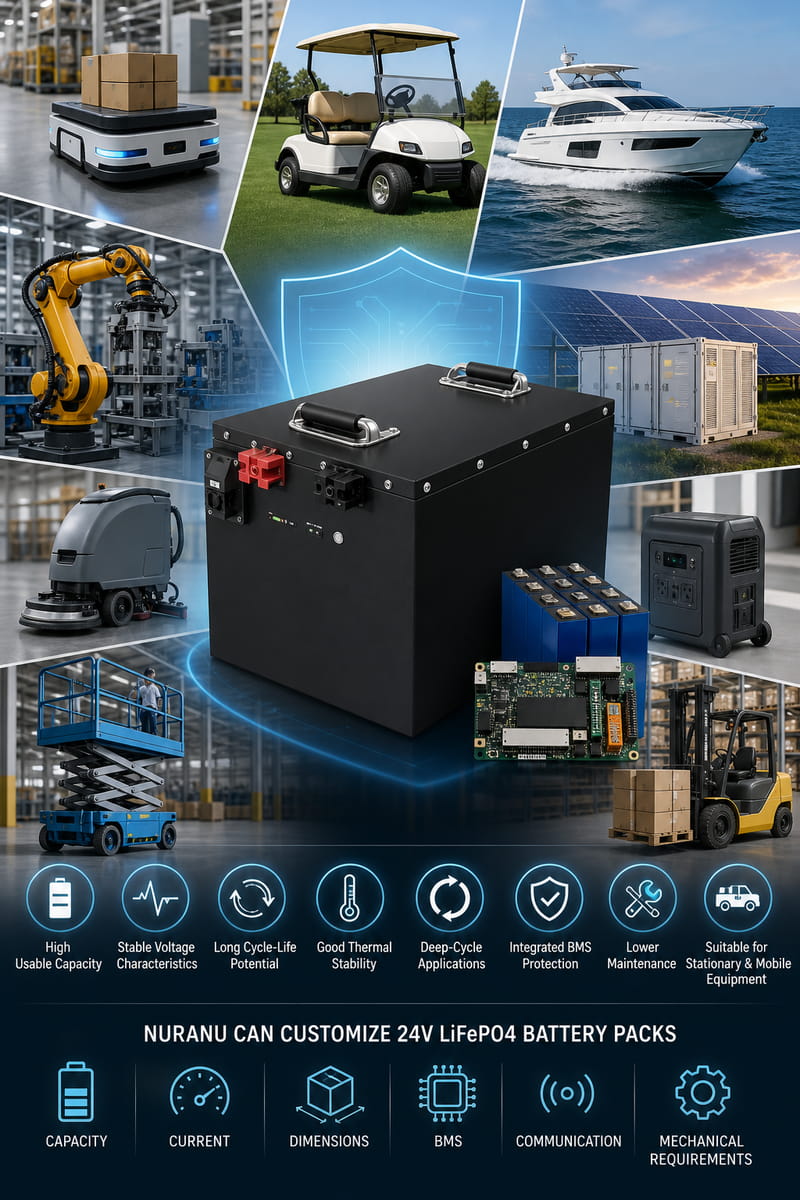
LiFePO4 is an important battery chemistry for 24V applications where safety, durability, deep-cycle operation, and long service life are priorities.

A common 24V-class LiFePO4 battery uses an 8S configuration, resulting in approximately 25.6V nominal voltage.

Typical applications include:

  • AGVs
  • Golf carts
  • Marine equipment
  • Industrial machines
  • Solar energy storage
  • Backup power
  • Mobility equipment
  • Floor-cleaning machines
  • Material-handling equipment

Advantages of 24V LiFePO4

  • High usable capacity
  • Stable voltage characteristics
  • Long cycle-life potential
  • Good thermal stability
  • Suitable for deep-cycle applications
  • Integrated BMS protection
  • Lower maintenance than traditional lead-acid systems
  • Suitable for stationary and mobile equipment

Nuranu can customize 24V-class LiFePO4 packs according to capacity, current, dimensions, BMS, communication, and mechanical requirements.

24V LiFePO4 Battery

24V Lithium-Ion Battery

High-Energy-Density 24V Battery Packs

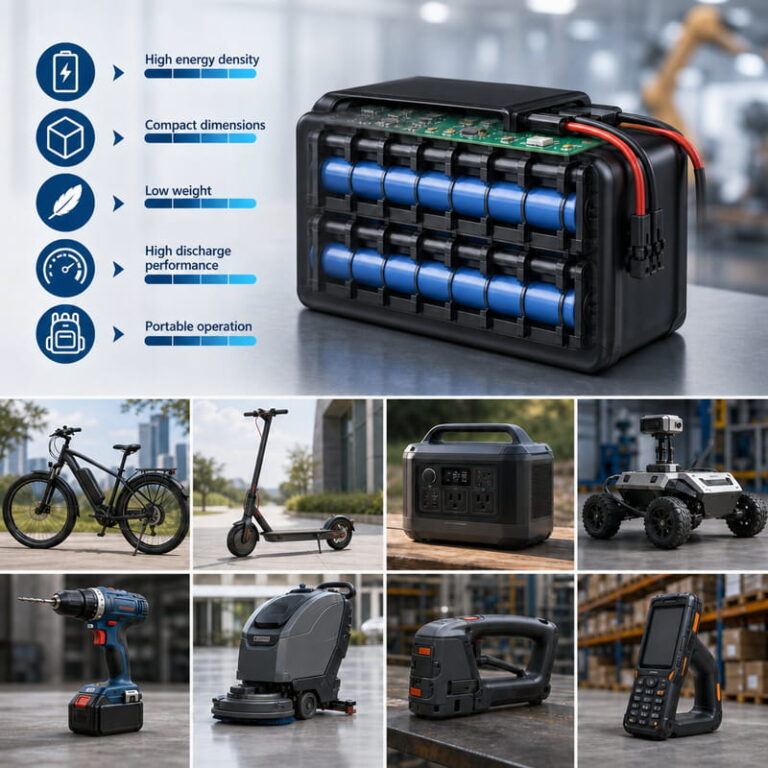
Lithium-ion/NMC chemistry can be considered when the application prioritizes:

  • High energy density
  • Compact dimensions
  • Low weight
  • High discharge performance
  • Portable operation

A custom lithium-ion battery configuration can be designed according to the required voltage and cell characteristics.

Potential applications include:

  • E-bikes
  • Electric scooters
  • Portable equipment
  • Robotics
  • Power tools
  • Cleaning equipment
  • Industrial handheld equipment
  • Compact mobility systems

The battery chemistry should be selected according to the complete application rather than voltage alone.

24V Lithium-Ion Battery

Custom 24V Lithium Battery for Different Applications

Custom 24V Lithium Battery for E-Bikes

E-Bikes

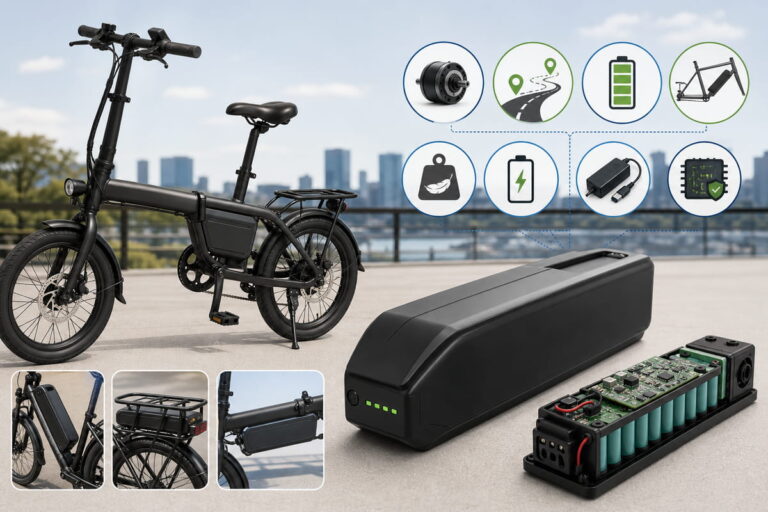
Nuranu designs custom 24V e-bike battery packs for compact bikes and light mobility devices, tailored to motor power, range, capacity, frame space, weight, peak current, charger, and BMS needs.
Custom 24V Lithium Battery for Electric Scooters

Electric Scooters

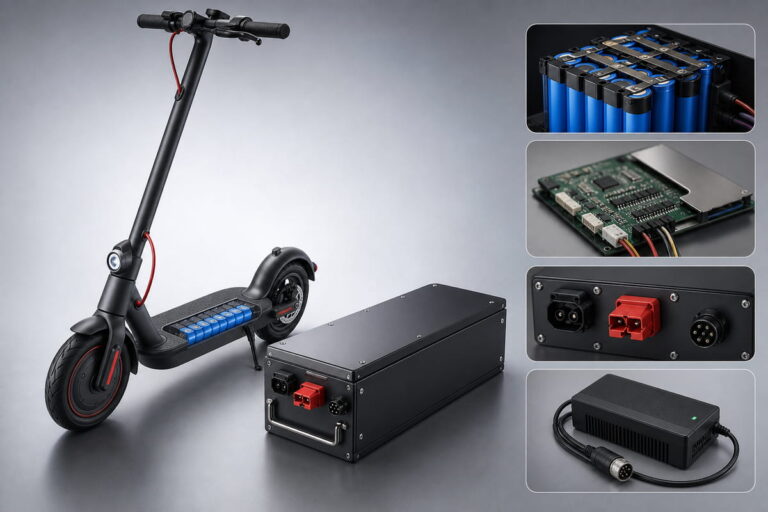
Nuranu develops compact 24V battery packs for electric scooters and small mobility platforms, customized for voltage, capacity, discharge current, enclosure, connectors, BMS, charger.

Custom 24V Lithium Battery for AGV

AGV

Nuranu develops custom 24V battery packs for AGVs that provide dependable power through frequent operating and charging cycles.
Custom 24V Lithium Battery for AMR & Robotics

AMR & Robotics

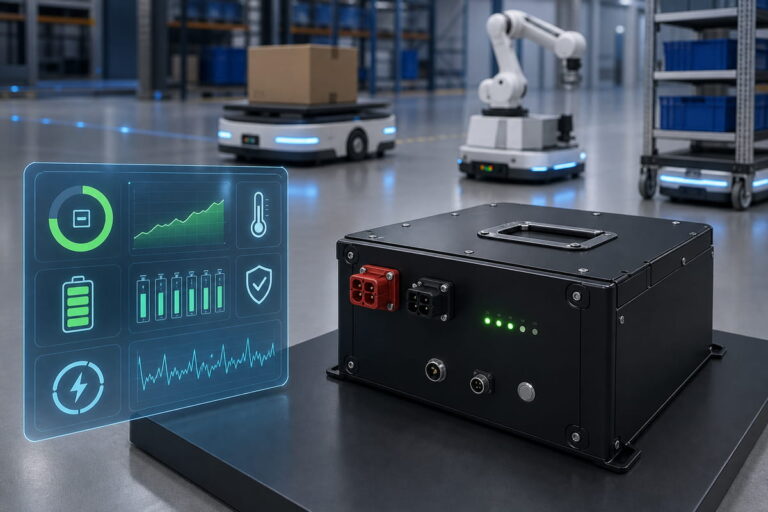
24V smart battery systems for autonomous mobile robots and robotic equipment, with advanced BMS features such as state-of-charge and state-of-health monitoring, cell balancing, temperature monitoring.

Custom 24V Lithium Battery for Industrial Equipment

Industrial Equipment

Nuranu develops 24V lithium battery packs for portable, mobile, and backup-powered equipment such as automation systems, floor scrubbers, inspection devices, material-handling machines, and monitoring equipment.

Custom Lithium Battery for Solar Energy Storage

Solar Energy Storage

Custom 24V LiFePO4 battery systems for small and medium solar storage applications, including off-grid power, solar lighting, portable systems, backup power, remote monitoring, and compact energy storage.

Custom Lithium Battery for Golf Carts

Golf Carts

Nuranu develops custom 24V lithium battery systems for golf carts, utility carts, maintenance vehicles, resort vehicles, warehouse vehicles, and other small electric vehicles.
Custom Lithium Battery for Marine Equipment

Marine Applications

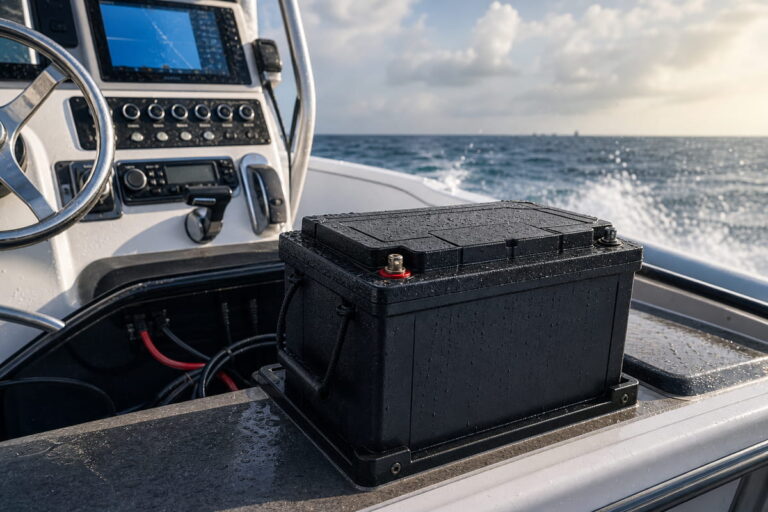
Nuranu develops custom 24V lithium battery packs for marine applications such as electric propulsion, trolling motors, navigation electronics, pumps, lighting, and communications equipment.
24V Lead-Acid Replacement Battery

Replace 24V SLA, AGM or Lead-Acid Systems with Lithium

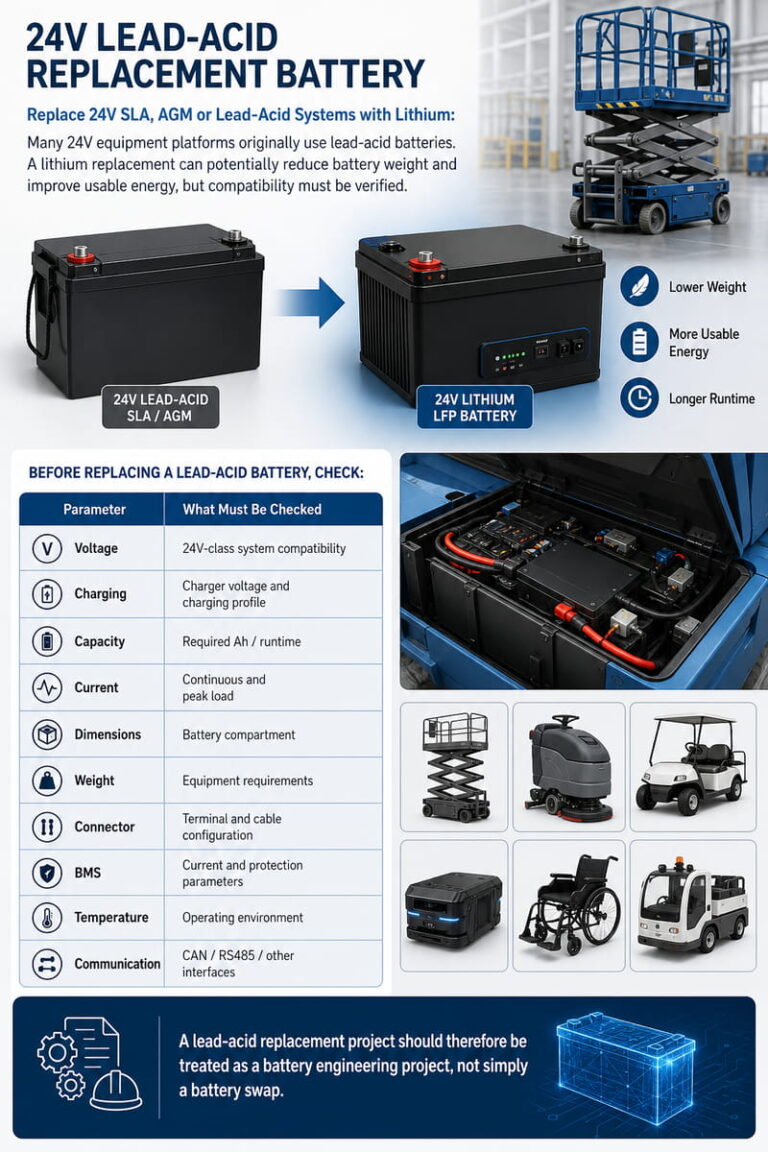
Many 24V equipment platforms originally use lead-acid batteries.

A lithium replacement can potentially reduce battery weight and improve usable energy, but compatibility must be verified.

Before replacing a lead-acid battery, check:

ParameterWhat Must Be Checked
Voltage24V-class system compatibility
ChargingCharger voltage and charging profile
CapacityRequired Ah / runtime
CurrentContinuous and peak load
DimensionsBattery compartment
WeightEquipment requirements
ConnectorTerminal and cable configuration
BMSCurrent and protection parameters
TemperatureOperating environment
CommunicationCAN / RS485 / other interfaces

A lead-acid replacement project should therefore be treated as a battery engineering project, not simply a battery swap.

24V Lead-Acid Replacement Battery

24V High-Discharge Battery

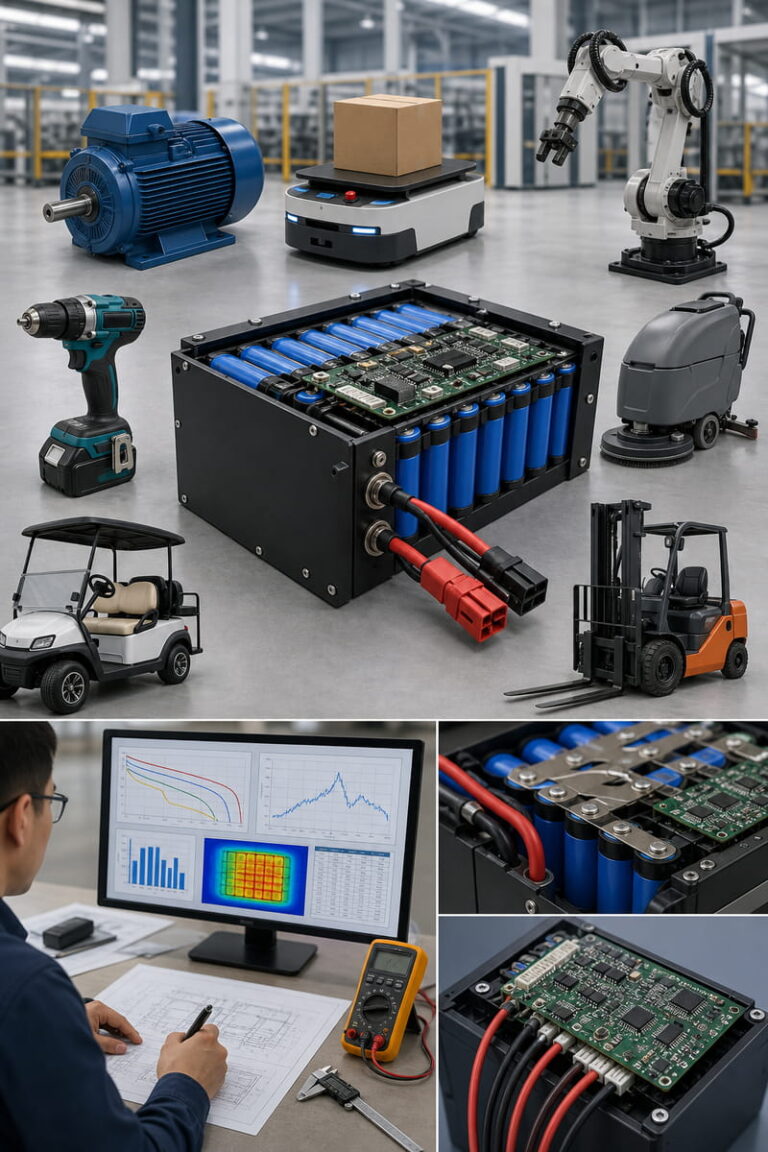
High-Current Battery Packs for Motors and Industrial Loads

Some 24V applications require significantly more current than standard energy-storage systems.

Examples include:

  • Electric motors
  • AGVs
  • Robotics
  • Power tools
  • Cleaning machines
  • Electric vehicles
  • Industrial equipment

For these applications, cell selection and BMS design are critical.

Nuranu can evaluate:

  • Continuous current
  • Peak current
  • C-rate
  • Motor startup current
  • Thermal performance
  • Cell internal resistance
  • BMS current rating
  • Wiring and connector requirements

The goal is to design a battery that can deliver the required power without unnecessarily increasing size or weight.

24V High-Discharge Battery

24V Battery BMS

Smart BMS for 24V Lithium Battery Packs

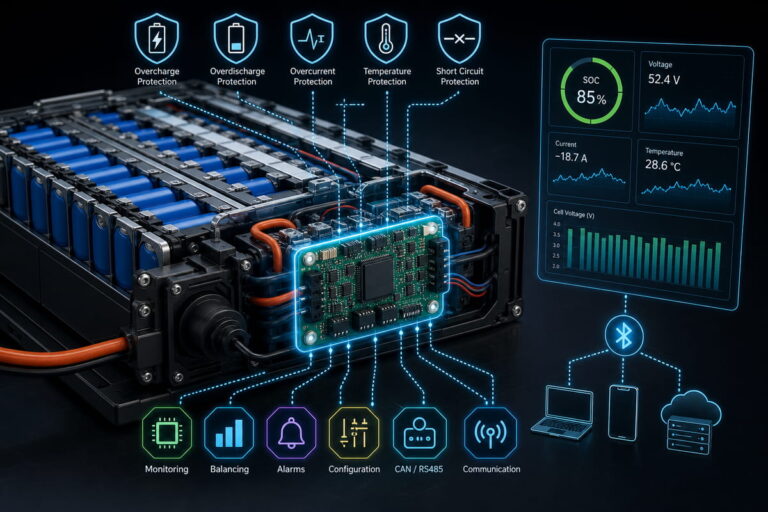
A custom 24V battery can integrate a BMS designed specifically for the application.

Protection

  • Overcharge protection
  • Over-discharge protection
  • Overcurrent protection
  • Short-circuit protection
  • Over-temperature protection
  • Low-temperature protection

Battery Monitoring

  • Cell voltage
  • Pack voltage
  • Current
  • Temperature
  • SOC
  • SOH

Communication

  • CAN
  • RS485
  • UART
  • Bluetooth
  • Other application-specific interfaces

For AGVs, AMRs, robots, industrial equipment, and smart energy systems, communication between the battery and host controller can be especially important.

24V Battery BMS

24V Battery Energy Calculation

How Much Energy Does a 24V Battery Store?

A simple way to estimate battery energy is:

Energy (Wh) = Voltage (V) × Capacity (Ah)

For a 24V-class system, approximate energy values are:

CapacityApprox. Energy at 24VApprox. Energy at 25.6V
10Ah240Wh256Wh
20Ah480Wh512Wh
30Ah720Wh768Wh
50Ah1,200Wh1,280Wh
100Ah2,400Wh2,560Wh
200Ah4,800Wh5,120Wh
300Ah7,200Wh7,680Wh

These are nominal calculations.

Actual usable energy depends on:

  • Battery chemistry
  • BMS cutoff limits
  • Discharge rate
  • Temperature
  • Cell characteristics
  • System efficiency
24V Battery Energy Calculation

24V Battery Series Configuration

How Is a 24V Battery Pack Configured?

The cell configuration depends on the selected chemistry.

For example, a typical LiFePO4 24V-class battery may use:

8 cells in series (8S)

At approximately 3.2V nominal per cell:

8 × 3.2V = 25.6V nominal

A lithium-ion/NMC battery uses a different cell voltage and therefore requires a different series configuration.

This is why the battery manufacturer should determine the cell configuration based on:

Chemistry + Required Voltage + Operating Range + Charger + BMS

The number of cells should never be selected solely from the “24V” label.

24V Battery Series Configuration

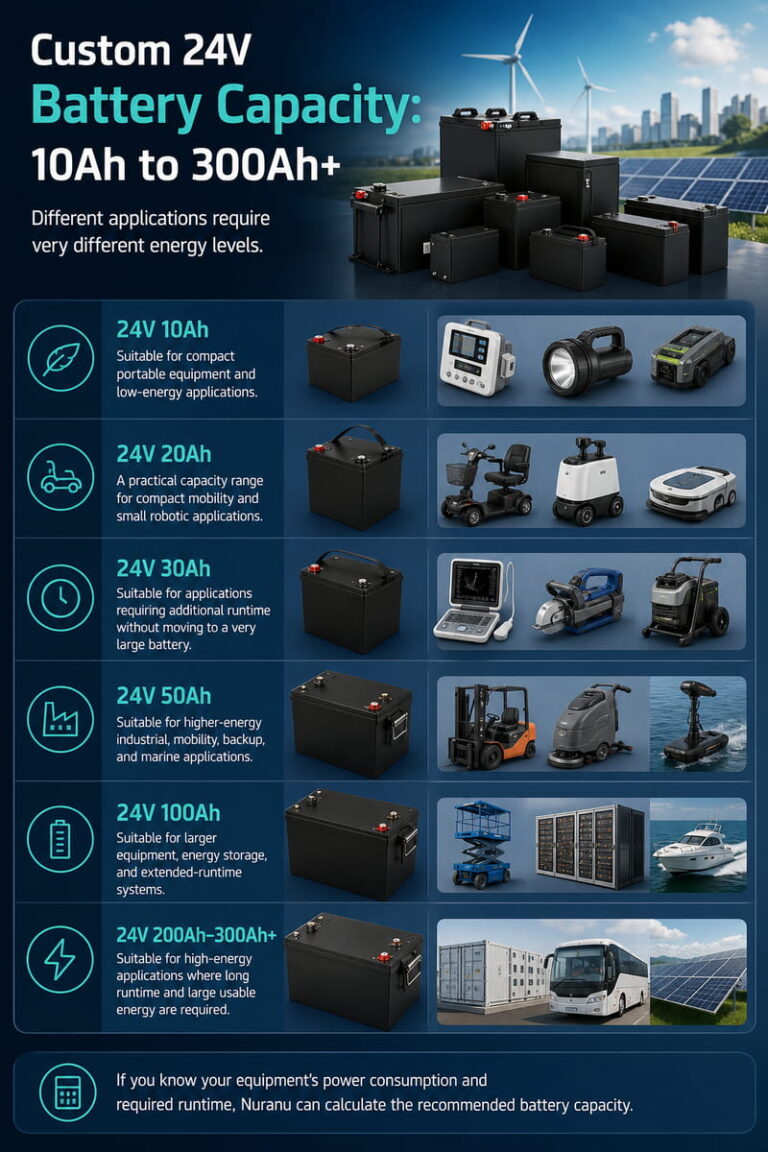
Custom 24V Battery Capacity

10Ah to 300Ah+ Custom Capacity

Different applications require very different energy levels.

24V 10Ah

Suitable for compact portable equipment and low-energy applications.

24V 20Ah

A practical capacity range for compact mobility and small robotic applications.

24V 30Ah

Suitable for applications requiring additional runtime without moving to a very large battery.

24V 50Ah

Suitable for higher-energy industrial, mobility, backup, and marine applications.

24V 100Ah

Suitable for larger equipment, energy storage, and extended-runtime systems.

24V 200Ah–300Ah+

Suitable for high-energy applications where long runtime and large usable energy are required.

If you know your equipment’s power consumption and required runtime, Nuranu can calculate the recommended battery capacity.

Custom 24V Battery Capacity

Custom 24V Battery Enclosure

Battery Housing Designed Around Your Equipment

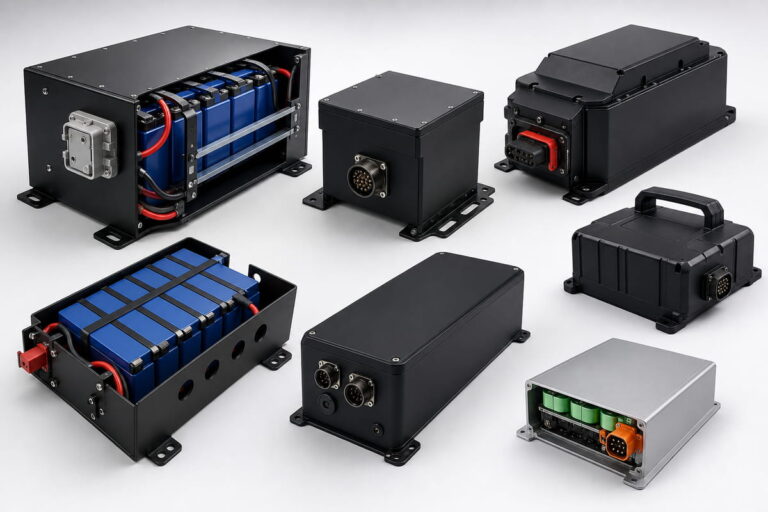
A 24V battery pack can be customized mechanically to fit your equipment.

Available customization may include:

  • Battery dimensions
  • Housing material
  • Mounting holes
  • Mounting brackets
  • Handles
  • Cable exits
  • Connector position
  • Display openings
  • Ventilation
  • Waterproofing
  • Shock protection
  • Thermal management

Potential enclosure materials include:

  • ABS
  • PC
  • Aluminum
  • Sheet metal
  • Custom molded housings

If you have an existing battery compartment, CAD drawing, or sample battery, our engineers can use it as the starting point for the design.

Custom 24V Battery Enclosure

Custom 24V Battery Connectors

Electrical Interface Designed for Your Equipment

The connector is an important part of a custom battery.

Depending on the application, the battery can be designed with:

  • Anderson connectors
  • XT-series connectors
  • Deutsch-style connectors
  • DC connectors
  • Custom terminals
  • Multi-pin communication connectors
  • Custom cable assemblies

Connector selection depends on:

  • Current
  • Voltage
  • Mechanical space
  • Mating cycles
  • Environmental conditions
  • Communication requirements

The connector should be selected together with the electrical and mechanical design.

Custom 24V Battery Connectors

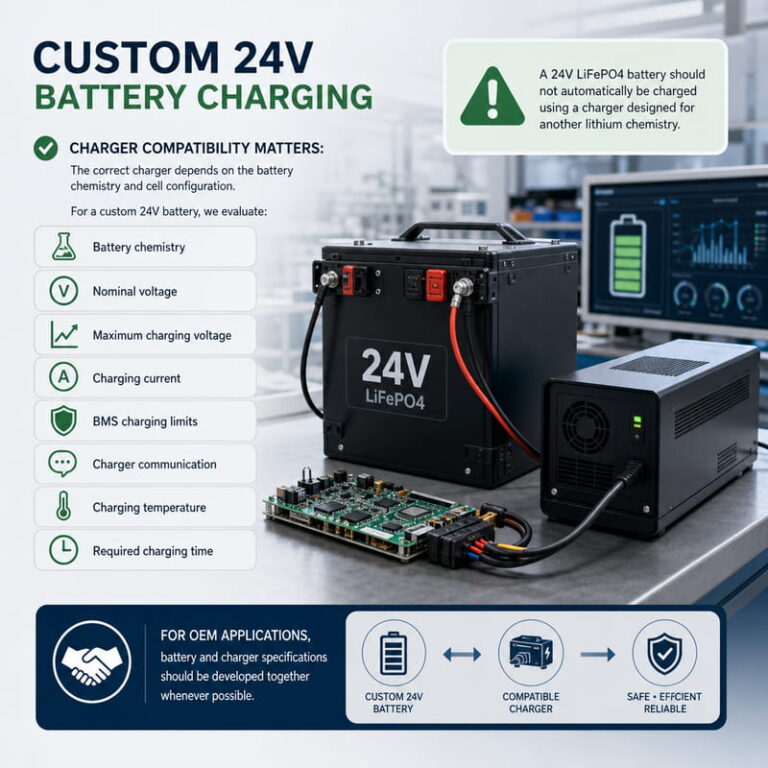
Custom 24V Battery Charging

Charger Compatibility Matters

The correct charger depends on the battery chemistry and cell configuration.

For a custom 24V battery, we evaluate:

  • Battery chemistry
  • Nominal voltage
  • Maximum charging voltage
  • Charging current
  • BMS charging limits
  • Charger communication
  • Charging temperature
  • Required charging time

A 24V LiFePO4 battery should not automatically be charged using a charger designed for another lithium chemistry.

For OEM applications, battery and charger specifications should be developed together whenever possible.

Custom 24V Battery Charging

24V Battery Development Process

From Requirements to Production

Nuranu follows a structured custom battery development process.

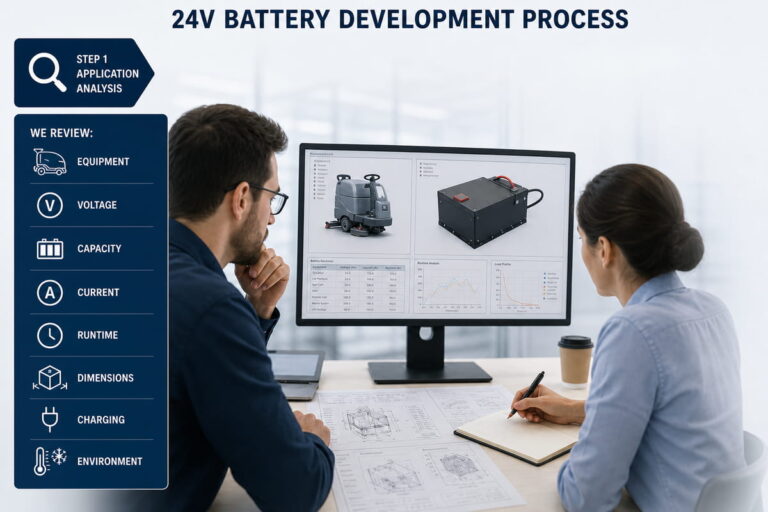
Step 1 — Application Analysis

We review:

  • Equipment
  • Voltage
  • Capacity
  • Current
  • Runtime
  • Dimensions
  • Charging
  • Environment
24V Battery Application Analysis

Step 2 — Cell Selection

We select appropriate cells based on:

  • Energy density
  • Capacity
  • Discharge capability
  • Cycle-life requirements
  • Size
  • Cost target
24V Battery Cell Selection

Step 3 — Electrical Design

We determine:

  • Series configuration
  • Parallel configuration
  • Capacity
  • Current capability
  • BMS architecture
24V Battery Electrical Design

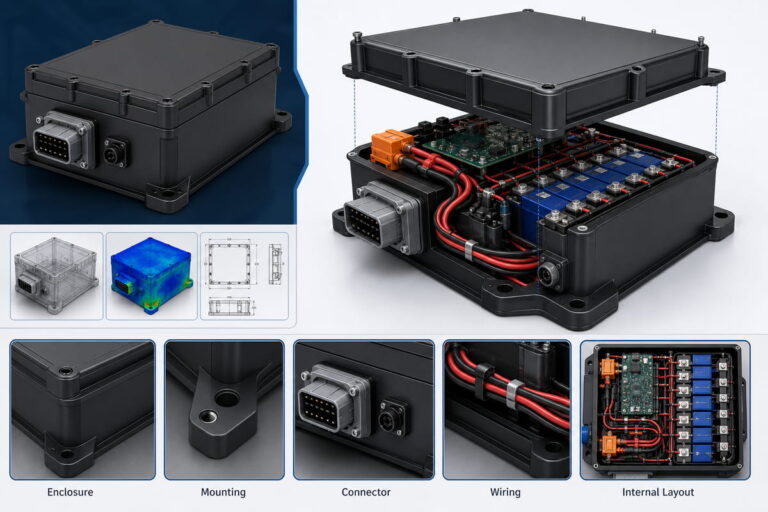
Step 4 — Mechanical Design

We develop:

  • Enclosure
  • Mounting
  • Connector
  • Wiring
  • Internal layout
24V Battery Mechanical Design

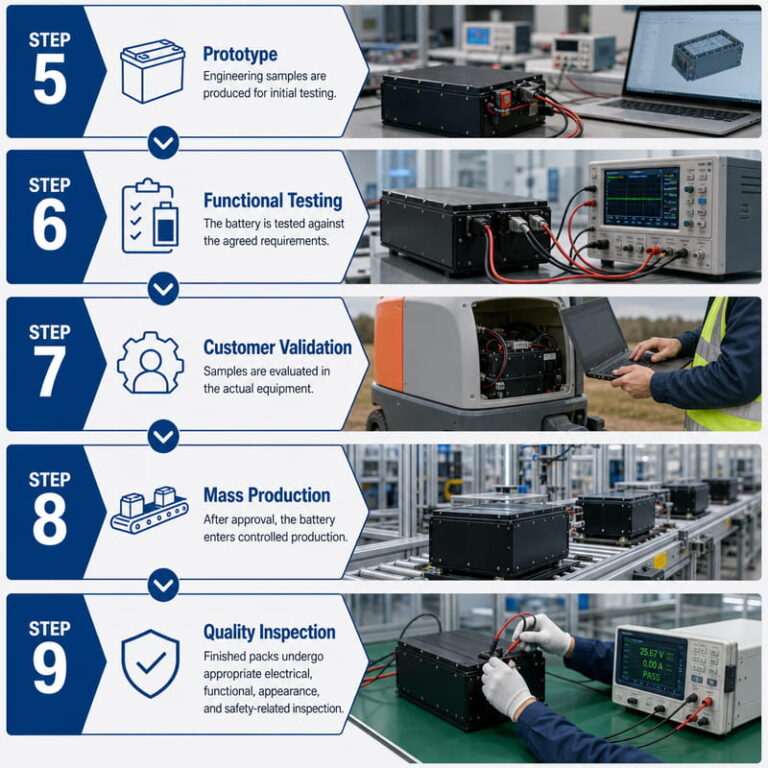
Step 5 — Prototype

Engineering samples are produced for initial testing.

Step 6 — Functional Testing

The battery is tested against the agreed requirements.

Step 7 — Customer Validation

Samples are evaluated in the actual equipment.

Step 8 — Mass Production

After approval, the battery enters controlled production.

Step 9 — Quality Inspection

Finished packs undergo appropriate electrical, functional, appearance, and safety-related inspection.

24V Battery Prototype, Functional Testing, Customer Validation, Mass Production and Quality Inspection

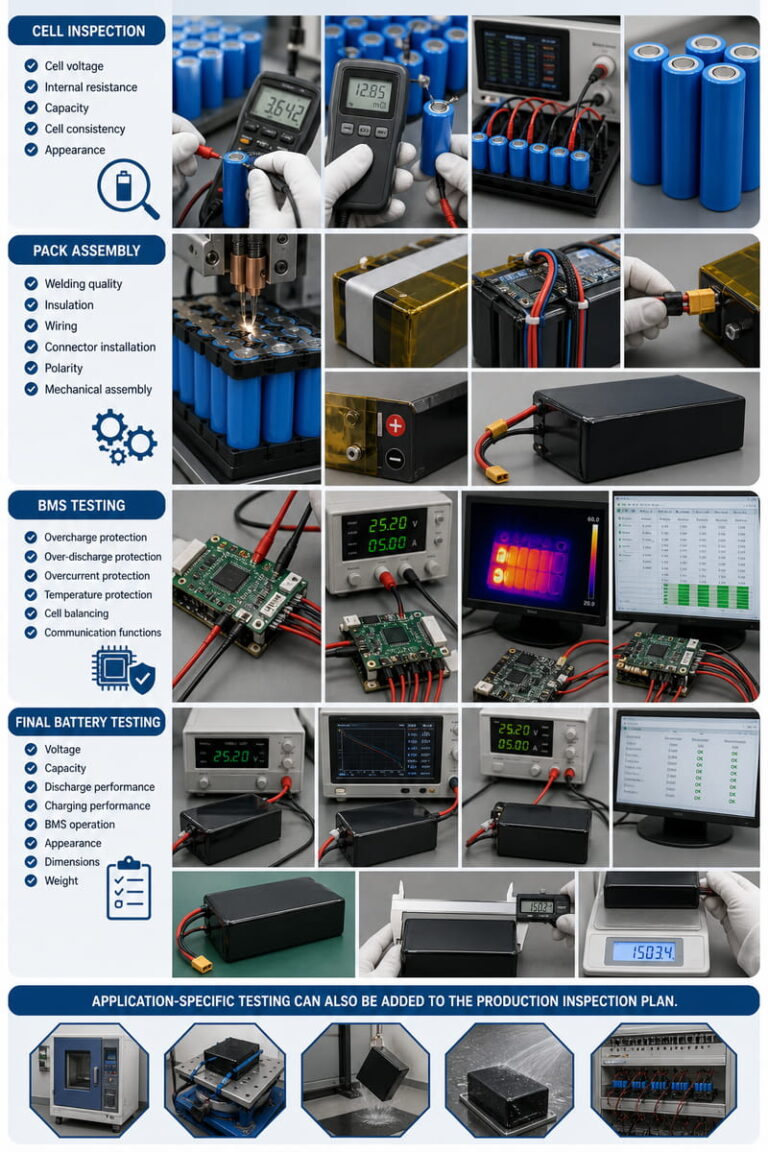
24V Battery Quality Control

Cell-to-Pack Quality Inspection

A reliable battery starts with consistent cells and continues through every production stage.

Cell Testing

  • Voltage
  • Capacity
  • Internal resistance
  • Cell matching
  • Appearance

Pack Assembly

  • Welding
  • Insulation
  • Wiring
  • Connector
  • Polarity
  • Mechanical assembly

BMS Testing

  • Protection functions
  • Current detection
  • Temperature monitoring
  • Cell balancing
  • Communication

Final Testing

  • Pack voltage
  • Capacity
  • Charge/discharge
  • Protection
  • Appearance
  • Dimensions
  • Weight

Nuranu’s broader battery manufacturing process includes cell selection, pack design, prototype development, testing, mass production, and quality inspection.

12V Battery Quality Control

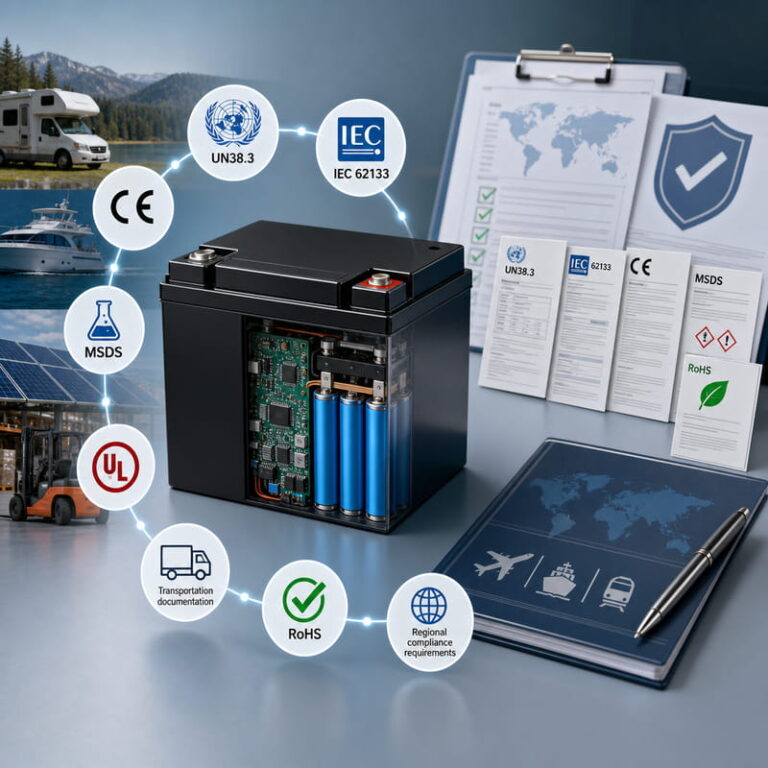
24V Lithium Battery Certifications

Different battery applications and markets may require different testing and documentation.

Depending on the battery design and destination market, support may include:

  • UN38.3
  • IEC 62133
  • CE
  • RoHS
  • MSDS
  • UL-related requirements
  • Transportation documentation

Certification requirements should be confirmed during the engineering stage because the applicable requirements depend on the final battery configuration and intended use.

12V Lithium Battery Certifications and Compliance

OEM / ODM 24V Lithium Battery Manufacturer

From Prototype to Mass Production

Nuranu supports companies that need application-specific 24V battery systems.

OEM Battery Manufacturing

Provide your:

  • Battery specification
  • Drawing
  • Existing battery
  • Product requirements
  • Technical documentation

We develop and manufacture the battery according to the agreed design.

ODM Battery Development

If you only have the product and performance requirements, Nuranu can help develop:

  • Cell configuration
  • Capacity
  • BMS
  • Enclosure
  • Connector
  • Wiring
  • Charging solution
  • Communication system

This allows the battery to be developed together with your product.

OEM ODM 12V Lithium Battery Manufacturing

Why Choose Nuranu for 24V Lithium Batteries?

More Than a Standard Battery Supplier

Nuranu provides custom battery engineering from electrical design to production.

Custom Voltage & Capacity

Battery specifications can be designed around your actual system requirements.

Smart BMS Integration

Integrate protection, monitoring, balancing, and communication.

Custom Mechanical Design

Battery housings, dimensions, connectors, mounting systems, and cable assemblies can be customized.

Prototype Support

Validate the battery before moving into larger production.

OEM/ODM Support

Nuranu's current platform emphasizes custom voltage/capacity, BMS, enclosures, connectors, prototyping, testing, and OEM/ODM manufacturing.

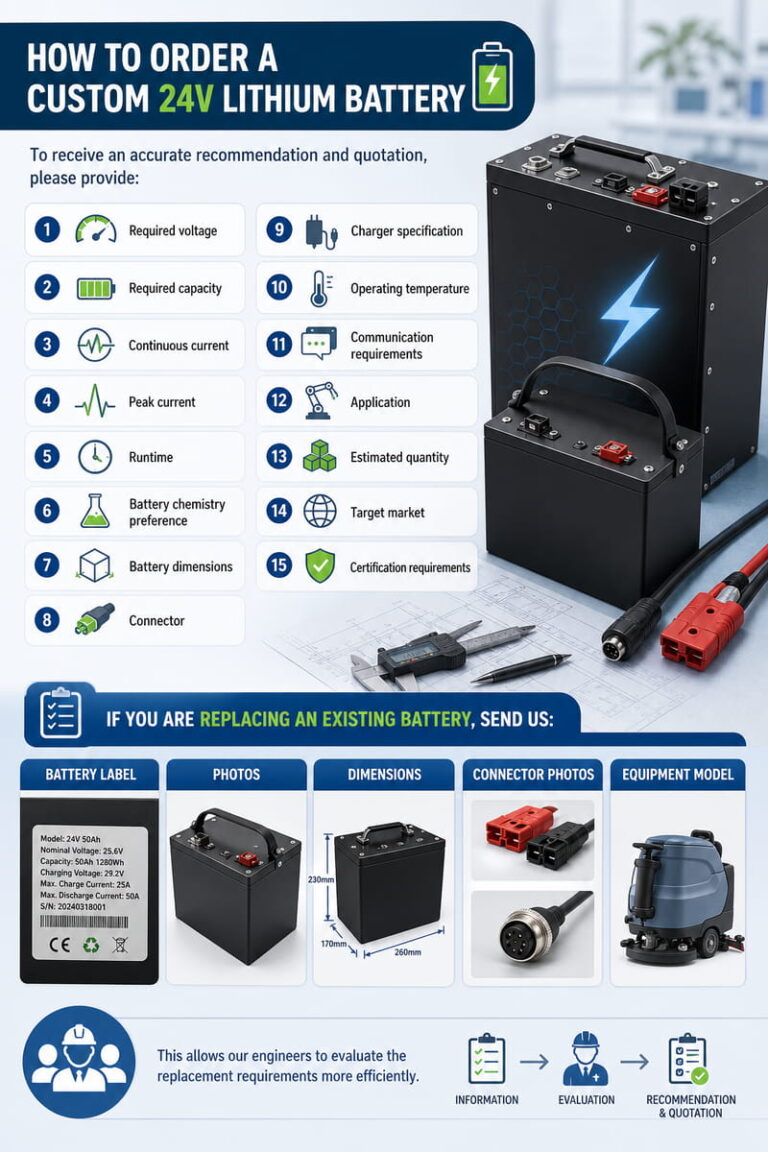
How to Order a Custom 24V Lithium Battery

To receive an accurate recommendation and quotation, please provide:

  1. Required voltage
  2. Required capacity
  3. Continuous current
  4. Peak current
  5. Runtime
  6. Battery chemistry preference
  7. Battery dimensions
  8. Connector
  9. Charger specification
  10. Operating temperature
  11. Communication requirements
  12. Application
  13. Estimated quantity
  14. Target market
  15. Certification requirements

If you are replacing an existing battery, send us:

Battery label + photos + dimensions + connector photos + equipment model

This allows our engineers to evaluate the replacement requirements more efficiently.

How to Order a Custom 24V Lithium Battery

24V Lithium Battery FAQ

A 24V lithium battery is a rechargeable battery designed for a 24V-class electrical system. The exact nominal voltage depends on the chemistry and cell configuration.

A common 24V-class LiFePO4 battery has a nominal voltage of approximately 25.6V, because it typically uses eight 3.2V nominal LiFePO4 cells in series.

Therefore, “24V LiFePO4” and “25.6V LiFePO4” can refer to the same system class.

“24V” is commonly used as the system/application voltage classification, while 25.6V is the nominal voltage of a typical 8S LiFePO4 battery.

The actual operating and charging voltage range must be checked before selecting the battery.

Yes. Nuranu can develop 24V-class 100Ah battery packs with custom BMS, enclosure, connectors, communication, and charging specifications.

Yes. High-capacity 24V-class battery systems can be developed for solar storage, industrial equipment, backup power, marine systems, and other high-energy applications.

It can be suitable for certain compact e-bike systems.

The correct battery depends on motor voltage, motor power, required range, peak current, physical dimensions, and controller requirements.

Yes, 24V-class LiFePO4 batteries can be considered for AGV applications where long cycle life, stable operation, and deep-cycle performance are priorities.

The final battery should be matched to the AGV’s current, charging, BMS communication, and operating requirements.

In many applications, yes. However, the charger, voltage range, capacity, current, dimensions, BMS, and communication requirements must be checked before replacement.

Yes. The battery enclosure can be designed with environmental protection requirements in mind, including sealing, connectors, cable exits, and mechanical structure.

The final IP rating should be determined and tested according to the actual enclosure design.

Yes. A smart BMS can be configured with CAN, RS485, UART, Bluetooth, or other communication interfaces depending on the host system.

The most important information includes:

Voltage + Capacity + Current + Runtime + Dimensions + Application + Charger + Connector

An existing battery sample, datasheet, drawing, or photographs can also help accelerate the design process.

Need a Custom 24V Lithium Battery?

Tell us your voltage, capacity, current, dimensions, and application. Our engineers can help you select the appropriate cell chemistry, cell configuration, BMS, enclosure, connector, and charging solution.

Contact Form
Scroll to Top

Ask a Quote

Contact Form