







Custom Capacity Battery Pack Manufacturer

Battery Capacity Designed Around Your Runtime and Power Requirements

Need a battery pack that delivers a specific runtime, capacity, or energy output?

Nuranu designs and manufactures custom capacity battery packs according to your product’s power consumption, required runtime, current demand, available space, weight limitations, and operating conditions.

We can customize: battery capacity, voltage, cell configuration, cell type, battery dimensions, discharge current, BMS, connector, charging specifications and battery enclosure.

From initial prototype to OEM mass production, Nuranu provides complete custom lithium battery pack development.

What Is Battery Capacity?

Understanding Ah and Wh

Battery capacity describes how much electrical energy a battery can store and deliver under specified conditions.

Capacity is commonly expressed in:

  • Amp-hours (Ah)
  • Watt-hours (Wh)

For many battery applications, Ah alone is not enough to compare total stored energy because battery voltage also matters.

A useful relationship is:

Energy (Wh) ≈ Voltage (V) × Capacity (Ah)

For example, a nominal 14.8V, 5Ah battery has approximately:

14.8V × 5Ah = 74Wh

The actual usable energy depends on factors such as discharge conditions, cutoff voltage, temperature, battery aging, and system efficiency.

This is why Nuranu evaluates voltage, capacity, current, and runtime together when designing a custom battery pack.

Understanding Ah and Wh

Custom Battery Capacity Based on Your Application

Start With the Runtime You Need

A battery should be designed around the actual requirements of the product.

For example, a cordless device may require:

  • 30 minutes of runtime
  • 60 minutes of runtime
  • 2 hours of runtime
  • 8 hours of runtime

The required capacity depends on the device’s power consumption.

A simplified estimation is:

Required Energy ≈ Power Consumption × Operating Time

For example, if a product consumes approximately 100W and needs to operate for 2 hours:

100W × 2h = 200Wh

The final battery capacity should then account for efficiency losses, operating conditions, usable depth of discharge, and other system requirements.

Nuranu can help translate your runtime target into a practical battery configuration.

Custom Battery Capacity Based on Your Application

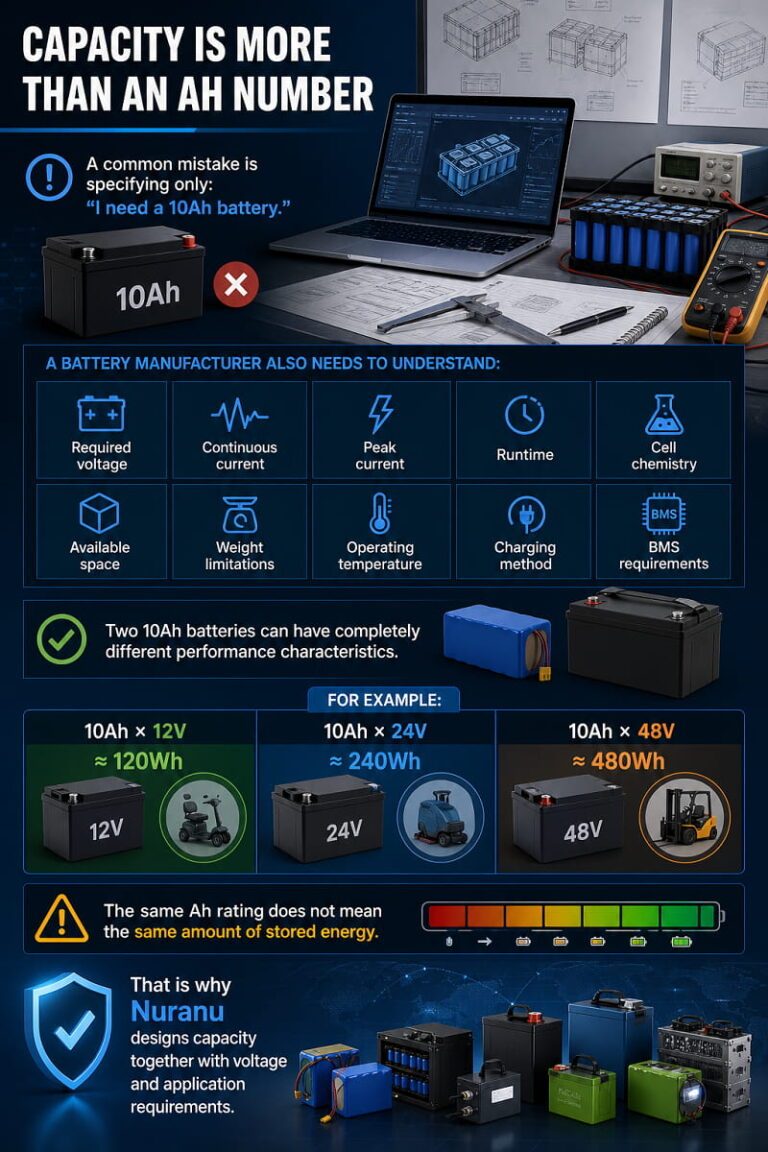
Capacity Is More Than an Ah Number

Why Battery Design Requires Engineering

A common mistake is specifying only: “I need a 10Ah battery.”

A battery manufacturer also needs to understand:

  • Required voltage
  • Continuous current
  • Peak current
  • Runtime
  • Cell chemistry
  • Available space
  • Weight limitations
  • Operating temperature
  • Charging method
  • BMS requirements

Two 10Ah batteries can have completely different performance characteristics.

For example:

  • 10Ah × 12V ≈ 120Wh
  • 10Ah × 24V ≈ 240Wh
  • 10Ah × 48V ≈ 480Wh

The same Ah rating does not mean the same amount of stored energy.

That is why Nuranu designs capacity together with voltage and application requirements.

Capacity Is More Than an Ah Number

Custom Capacity Battery Pack Configurations

Series and Parallel Cell Configuration

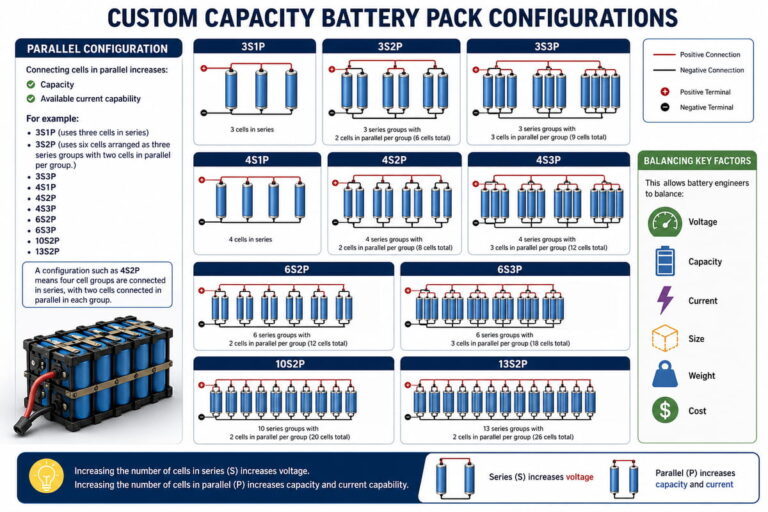
Battery capacity is affected by how cells are connected.

Series Configuration

Connecting cells in series primarily increases voltage.

  • 1S
  • 2S
  • 3S
  • 4S
  • 5S
  • 6S
  • 8S
  • 10S
  • 13S

Parallel Configuration

Connecting cells in parallel increases:

  • Capacity
  • Available current capability

For example:

  • 3S1P
  • 3S2P
  • 3S3P
  • 4S1P
  • 4S2P
  • 4S3P
  • 6S2P
  • 6S3P
  • 10S2P
  • 13S2P

A configuration such as 4S2P means four cell groups are connected in series, with two cells connected in parallel in each group.

This allows battery engineers to balance:

  • Voltage
  • Capacity
  • Current
  • Size
  • Weight
  • Cost
Series and Parallel Cell Configuration
Parallel Configuration

Custom Capacity and Battery Voltage

Voltage and Capacity Must Be Designed Together

Custom capacity cannot be considered independently from voltage.

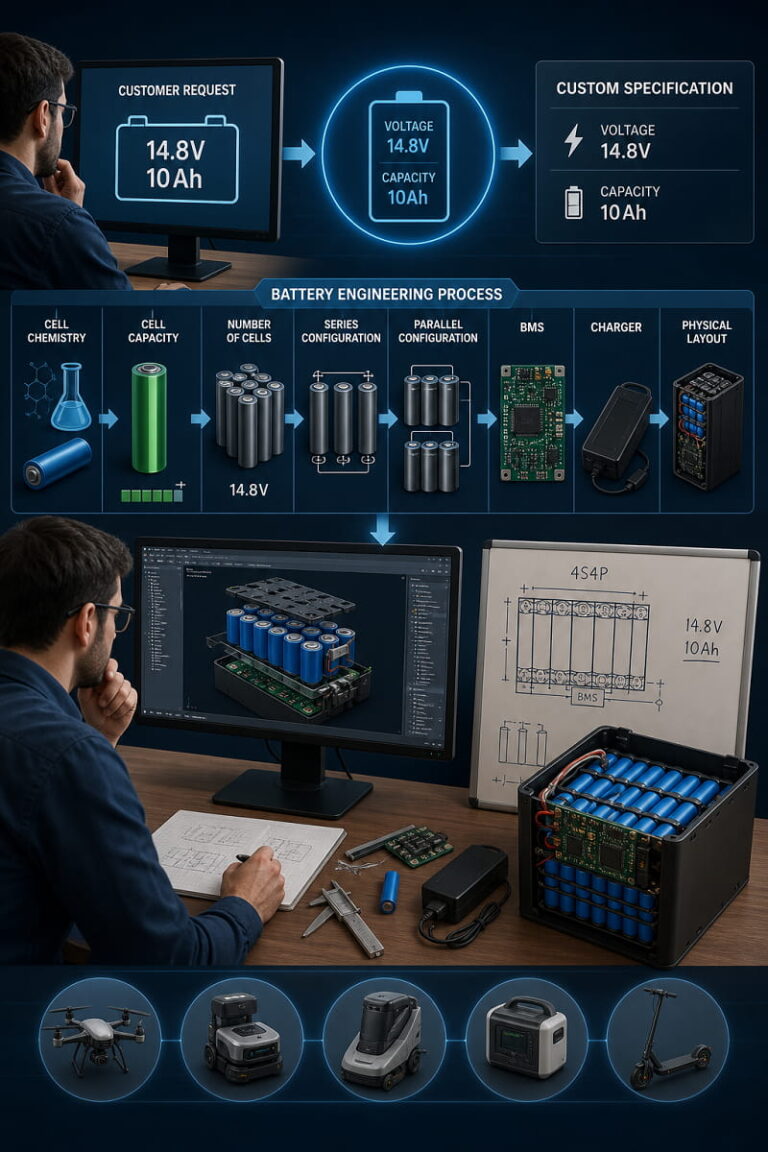
For example, a customer may request:

  • 14.8V 10Ah

This specification defines both:

  • Voltage
  • Capacity

The battery engineer must then determine:

  • Cell chemistry
  • Cell capacity
  • Number of cells
  • Series configuration
  • Parallel configuration
  • BMS
  • Charger
  • Physical layout

This is where professional battery engineering becomes important.

Need a Specific Battery Voltage?

See:

Custom Capacity and Battery Voltage

High Capacity Battery Pack Design

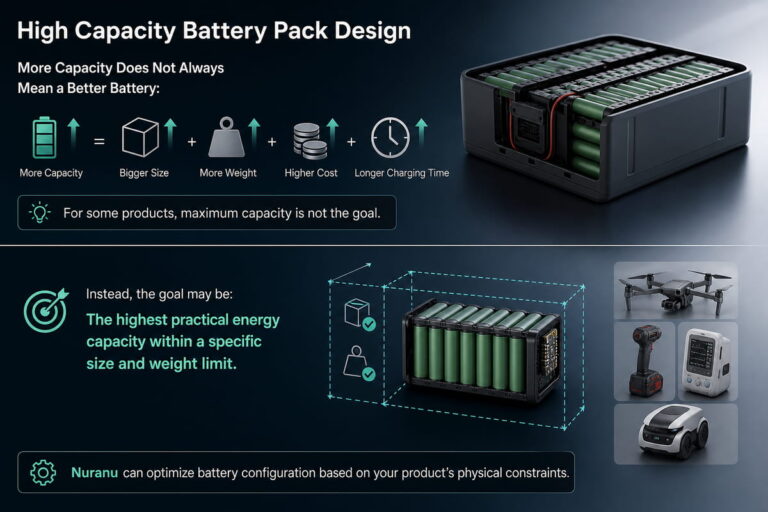
More Capacity Does Not Always Mean a Better Battery

Increasing capacity can provide longer runtime, but it can also increase:

  • Battery size
  • Weight
  • Cost
  • Charging time

For some products, maximum capacity is not the goal.

Instead, the goal may be: The highest practical energy capacity within a specific size and weight limit.

Nuranu can optimize battery configuration based on your product’s physical constraints.

High Capacity Battery Pack Design

High Energy Density Battery Solutions

Maximize Runtime Within Limited Space

When battery space is limited, cell selection becomes particularly important.

Nuranu can evaluate:

  • Cell dimensions
  • Cell capacity
  • Energy density
  • Discharge capability
  • Internal resistance
  • Cycle life
  • Operating temperature

The goal is to achieve an appropriate balance between: Capacity + Power + Size + Weight + Reliability

This is particularly important for:

  • Cordless tools
  • Vacuum cleaners
  • Robotics
  • Portable electronics
  • Medical equipment
  • Industrial devices
High Energy Density Battery Solutions

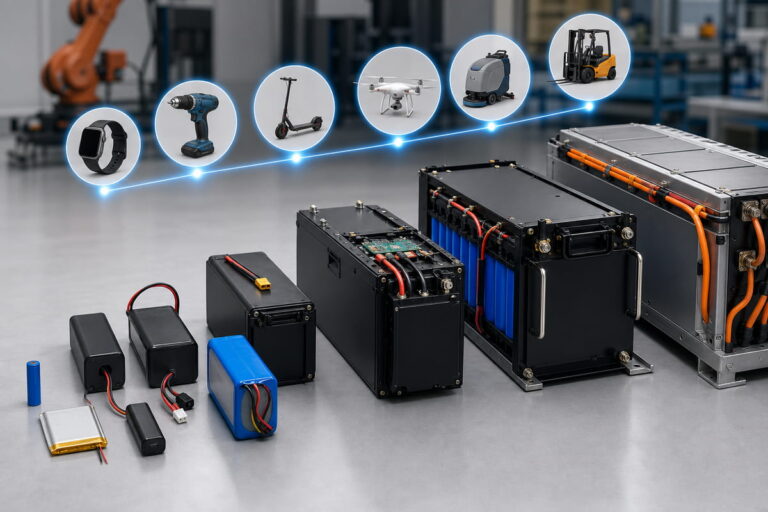
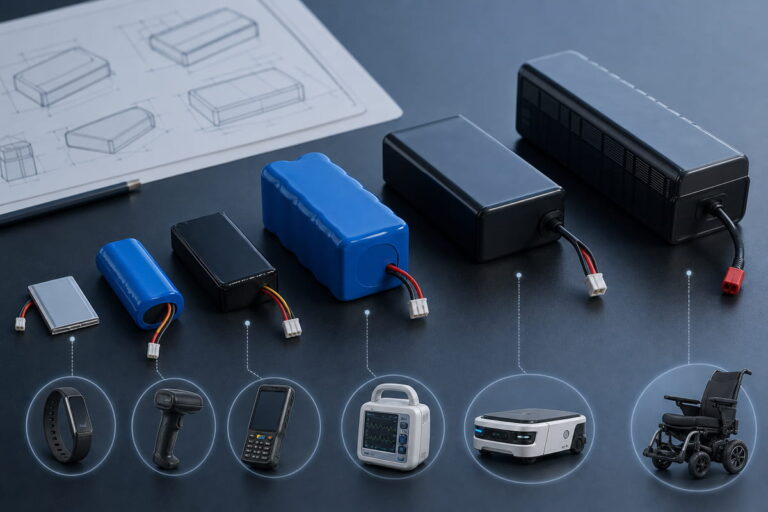
Custom Battery Capacity for Different Applications

Nuranu develops custom capacity battery packs for a wide range of products.

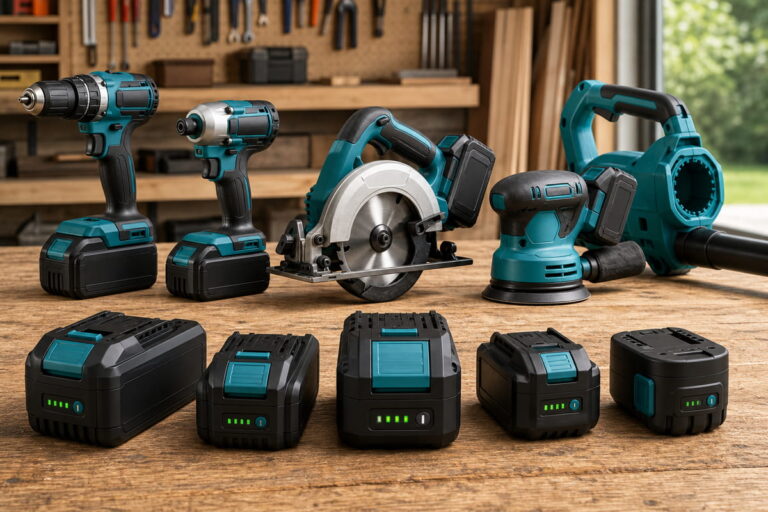
Custom Battery Pack for Power Tools

Power Tools

Custom capacity battery packs for:
Cordless drills
Impact drivers
Saws
Sanders
Outdoor power equipment
Higher capacity can be used when longer operating time is more important than minimum battery weight.
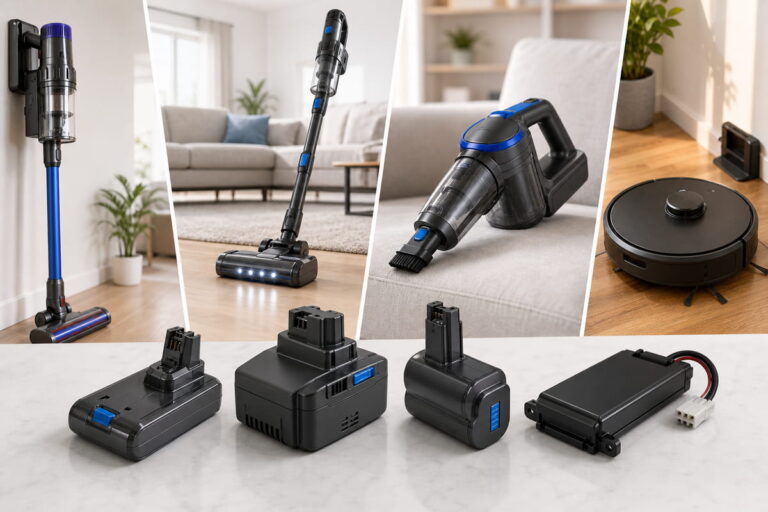
Custom Battery Pack for Vacuum Cleaners

Vacuum Cleaners

Custom battery capacity solutions for:
Cordless vacuum cleaners
Stick vacuums
Handheld vacuums
Robot vacuum cleaners
Battery capacity can be optimized according to:
Cleaning runtime
Motor power
Battery compartment
Product weight

Custom Battery Pack for Robotics & Automation

Robotics

Battery capacity is especially important for mobile robots.
Applications include:
Mobile robots
AGVs
AMRs
Autonomous equipment
Service robots
Nuranu can design battery packs around: operating time, drive motor demand, peak loads, charging cycles andavailable space

Custom Battery Pack for Medical Devices

Medical Devices

For suitable portable medical devices, battery capacity can be optimized around:
Voltage
Capacity
Size
Runtime
Protection requirements
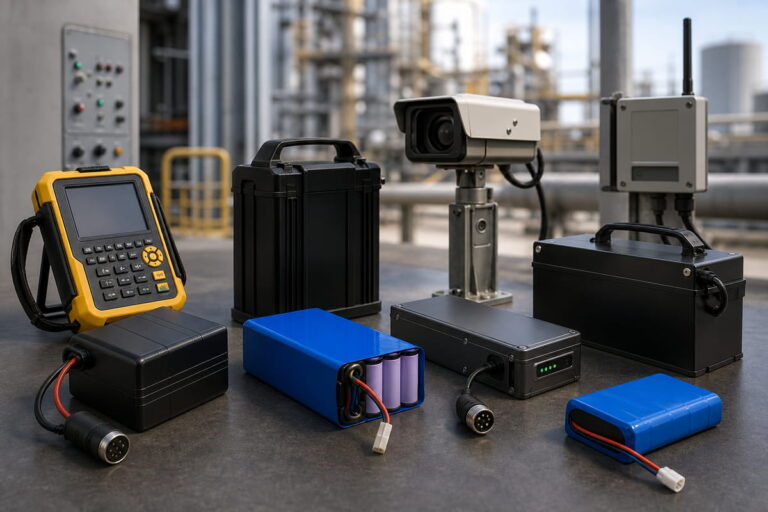
Custom Battery Pack for Industrial Equipment

Industrial Equipment

Custom battery packs for:
Portable instruments
Inspection equipment
Monitoring systems
Industrial electronics
Mobile equipment

Custom Battery Pack for IoT & Smart Devices

IoT & Smart Devices

For connected devices, capacity can be optimized around:
Standby time
Active operating time
Communication frequency
Device size
Battery replacement interval

Custom Capacity by Battery Chemistry

Nuranu supports different lithium battery chemistries depending on application requirements.

Lithium-Ion Battery Packs

Lithium-ion cells are widely used when customers require:

  • High energy density
  • Compact size
  • Good power capability
  • Flexible battery configurations

Common applications include:

  • Power tools
  • Vacuum cleaners
  • Robotics
  • Portable equipment
  • Consumer electronics
Custom Lithium-Ion Battery Packs Voltage Option

LiFePO4 Battery Packs

LiFePO4 batteries are often considered for applications that prioritize:

  • Long cycle life
  • Thermal stability
  • Safety
  • Durable operation

Applications can include:

  • Energy storage
  • Industrial equipment
  • Portable power
  • Backup systems
Custom LiFePO4 Battery Packs Voltage Option

Lithium Polymer Battery Packs

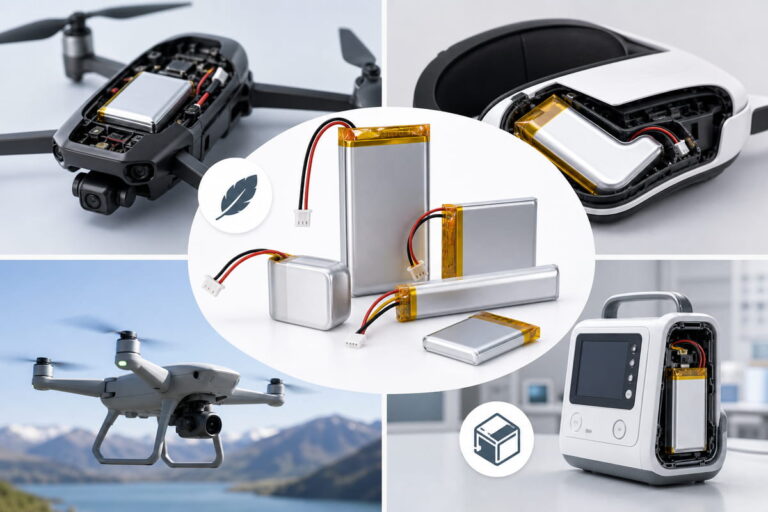
Lithium polymer cells can be useful when the battery must fit into a customized or space-constrained enclosure.

Advantages can include:

  • Flexible form factors
  • Low-profile designs
  • Lightweight construction

Applications include:

  • IoT devices
  • Portable electronics
  • Wearable products
  • Compact equipment
Custom Lithium Polymer Battery Packs Voltage Option

Custom Capacity and Discharge Current

Capacity Alone Does Not Determine Battery Performance

A battery with high Ah capacity may not necessarily provide enough current for a high-power application.

Nuranu evaluates both:

Capacity

How much energy the battery can store.

Discharge Current

How much current the battery can safely provide.

For products such as:

  • Power tools
  • Motors
  • Robotics
  • Pumps
  • High-power equipment

peak and continuous current requirements can be particularly important.

Battery cell selection must therefore consider both capacity and discharge performance.

Custom Capacity and Discharge Current

Custom BMS for Capacity Battery Packs

Protect and Manage the Battery System

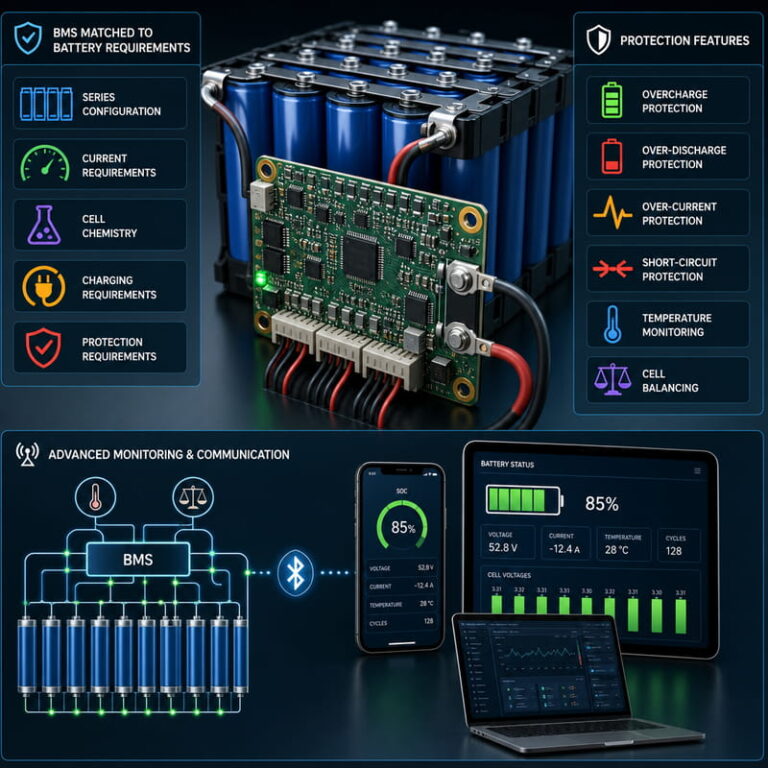
The BMS should be matched to the battery’s:

  • Series configuration
  • Current requirements
  • Cell chemistry
  • Charging requirements
  • Protection requirements

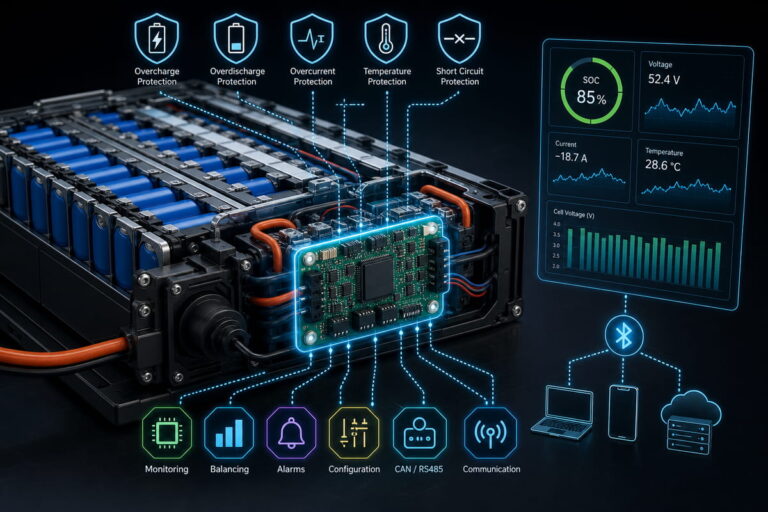
Depending on the application, the BMS can provide:

  • Overcharge protection
  • Over-discharge protection
  • Over-current protection
  • Short-circuit protection
  • Temperature monitoring
  • Cell balancing

Advanced battery systems may also support communication and battery monitoring.

Custom BMS for Capacity Battery Packs

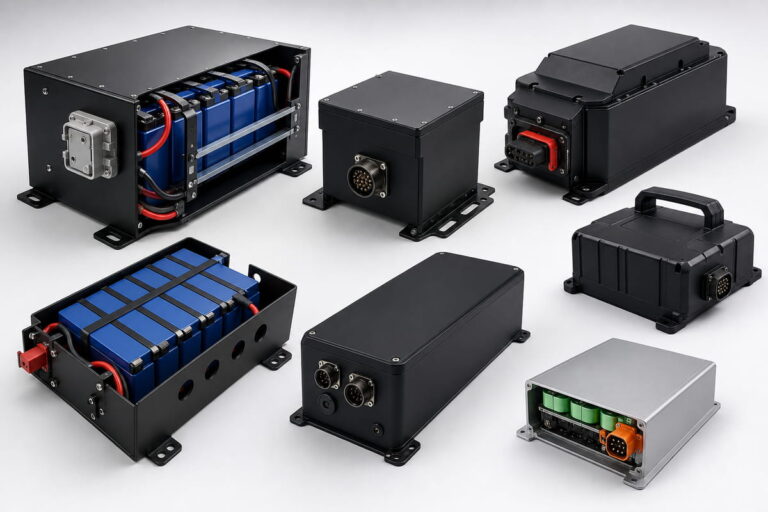
Custom Capacity Battery Enclosure

Fit More Energy Into the Available Space

Increasing capacity often means adding cells.

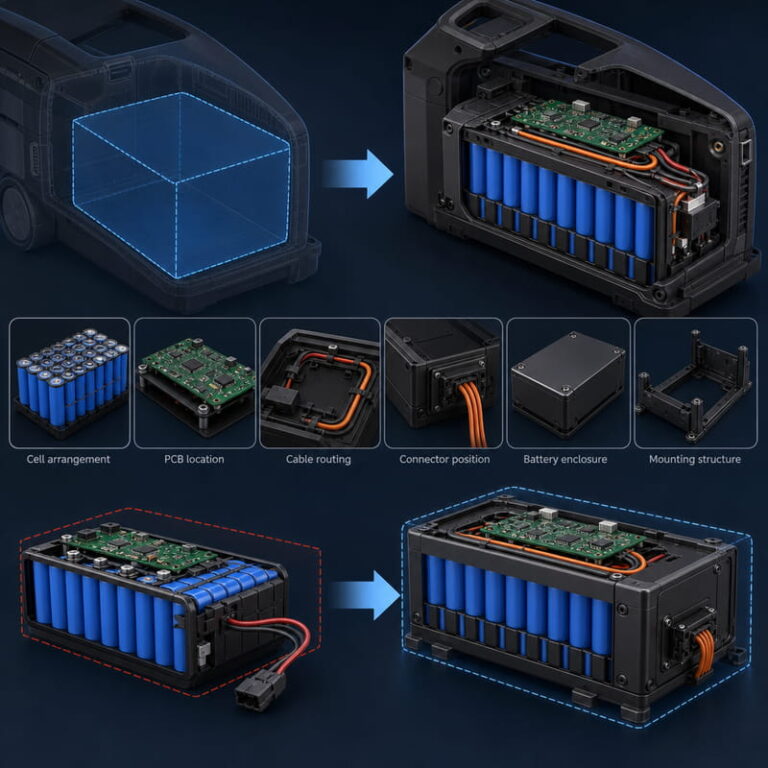
But the battery still needs to fit inside the customer’s product.

Nuranu can optimize:

  • Cell arrangement
  • PCB location
  • Cable routing
  • Connector position
  • Battery enclosure
  • Mounting structure

This allows the battery capacity to be optimized within the available installation area.

Custom Capacity Battery Enclosure

Runtime Optimization

How Much Battery Capacity Do You Actually Need?

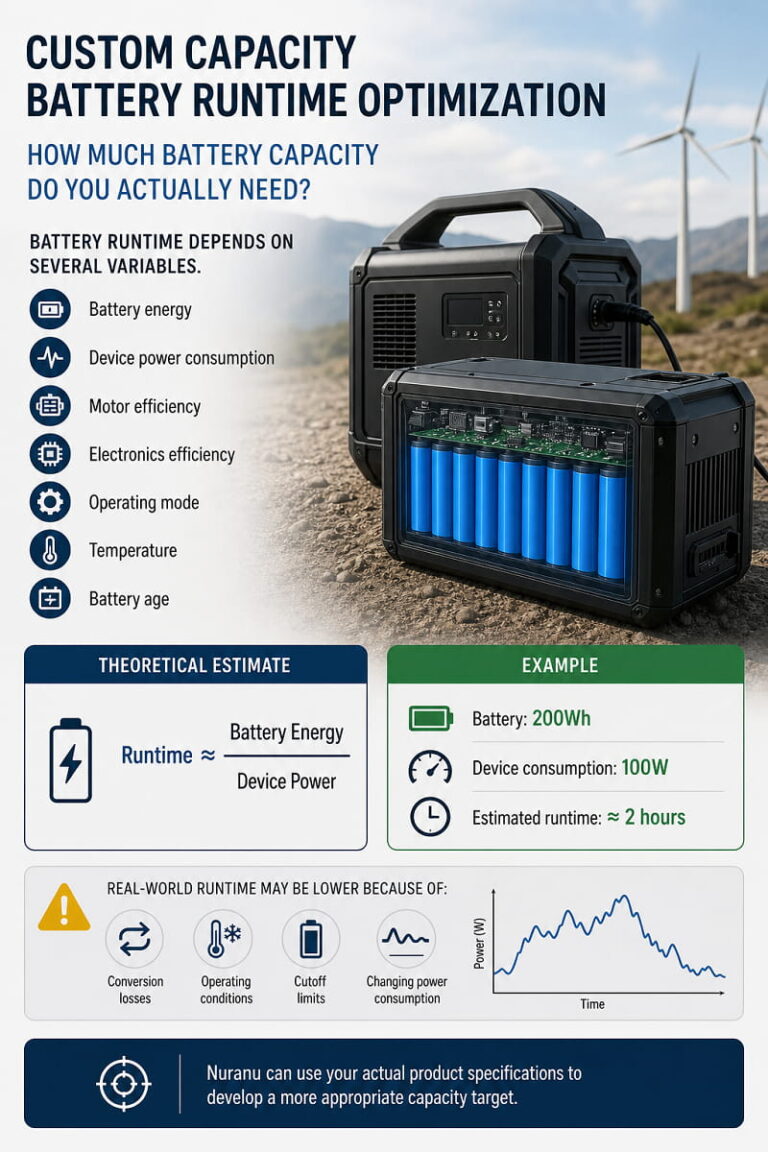
Battery runtime depends on several variables.

Important factors include:

  • Battery energy
  • Device power consumption
  • Motor efficiency
  • Electronics efficiency
  • Operating mode
  • Temperature
  • Battery age

A simple theoretical estimate is:

Runtime ≈ Battery Energy ÷ Device Power

For example:

  • Battery: 200Wh
  • Device consumption: 100W
  • Estimated runtime: ≈ 2 hours

Real-world runtime may be lower because of conversion losses, operating conditions, cutoff limits, and changing power consumption.

Nuranu can use your actual product specifications to develop a more appropriate capacity target.

Custom Capacity Battery Runtime Optimization

Custom Capacity Battery Pack Design Process

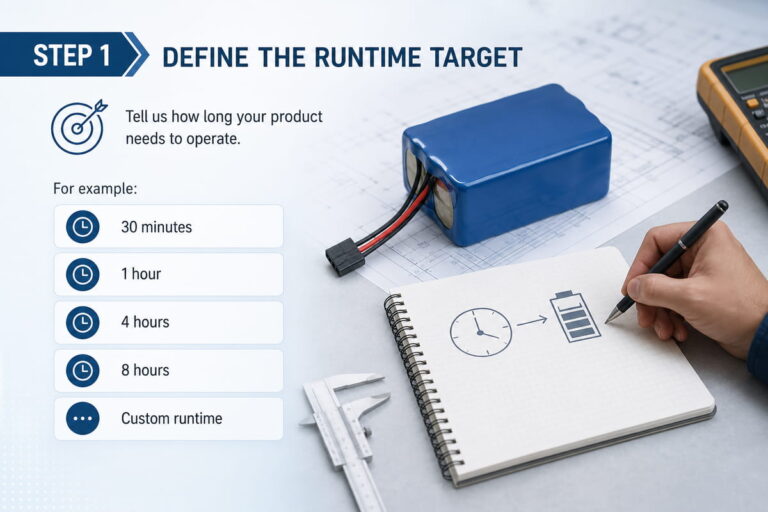
Step 1 — Define the Runtime Target

Tell us how long your product needs to operate.

For example:

  • 30 minutes
  • 1 hour
  • 4 hours
  • 8 hours
  • Custom runtime
Define the Runtime Target of Custom Capacity Battery Pack

Step 2 — Determine Power Consumption

We evaluate:

  • Nominal power
  • Continuous power
  • Peak power
  • Current demand
Determine Power Consumption of Custom Capacity Battery Pack

Step 3 — Calculate Required Energy

The required energy is estimated from:

  • Power consumption
  • Runtime
  • System efficiency
  • Usable battery range
Calculate Required Energy of Custom Capacity Battery Pack

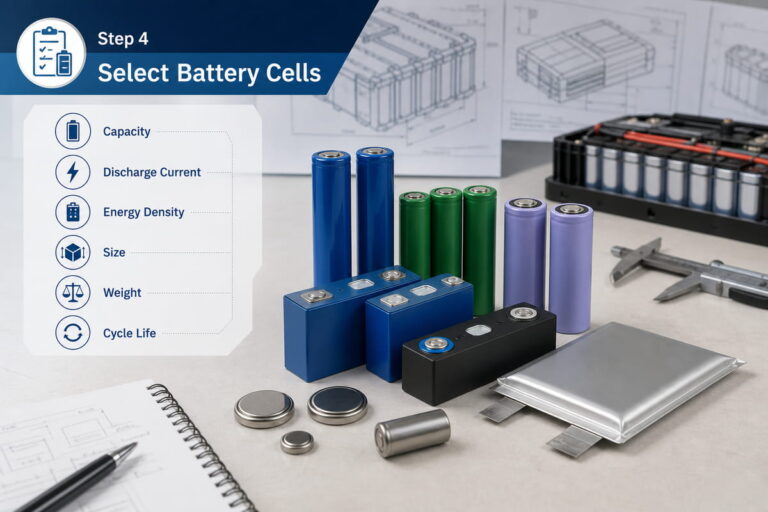
Step 4 — Select Battery Cells

Cell selection considers:

  • Capacity
  • Discharge current
  • Energy density
  • Size
  • Weight
  • Cycle life
Select Battery Cells of Custom Capacity Battery Pack

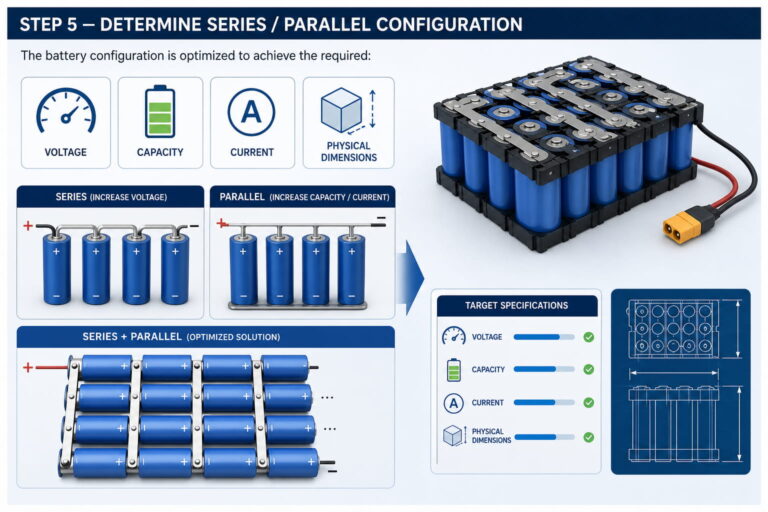
Step 5 — Determine Series / Parallel Configuration

The battery configuration is optimized to achieve the required:

  • Voltage
  • Capacity
  • Current
  • Physical dimensions
Determine Series or Parallel Configuration Custom Capacity Battery Pack

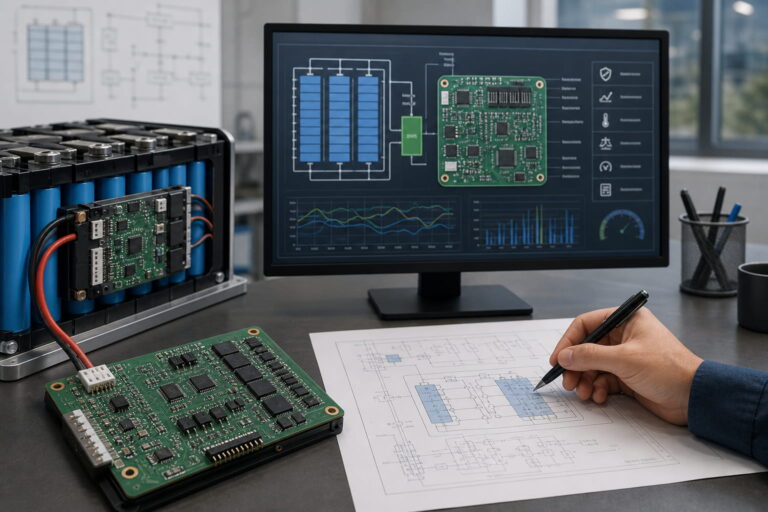
Step 6 — Design the BMS

The BMS is matched to the battery configuration and application.

Design the BMS of Custom Capacity Battery Pack

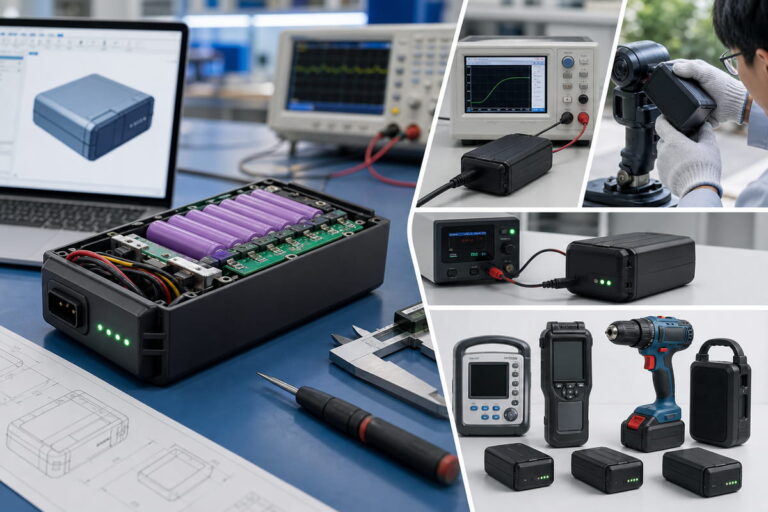
Step 7 — Develop a Prototype

Samples are manufactured for:

  • Capacity testing
  • Runtime testing
  • Charging validation
  • Product compatibility
Develop a Prototype of Custom Capacity Battery Pack

Step 8 — Production

After approval, the battery moves into OEM mass production.

Custom Capacity Battery Pack Production

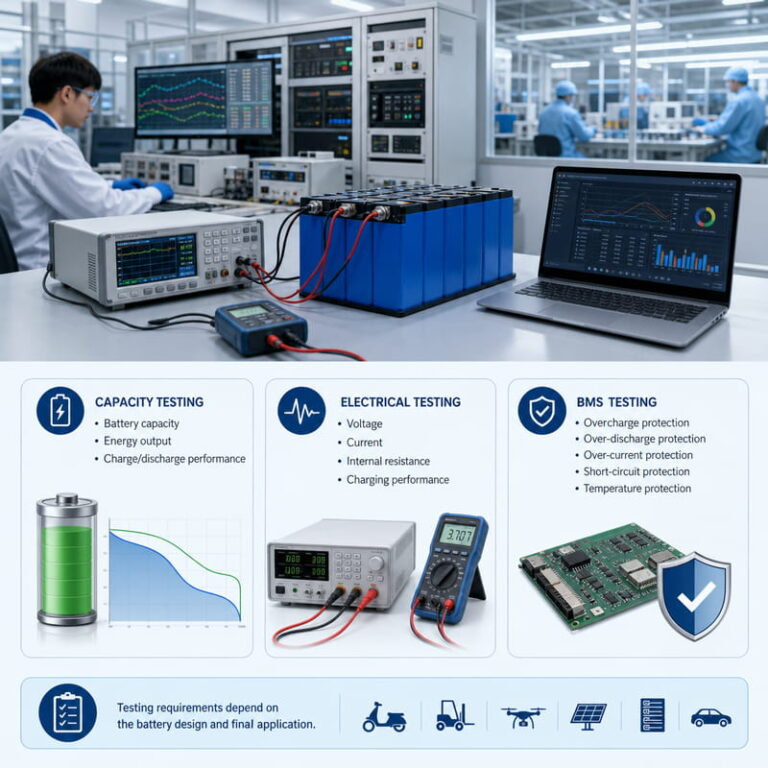
Custom Battery Capacity Testing

Verify the Battery Before Mass Production

Nuranu can perform appropriate battery testing during development and production.

Capacity Testing

  • Battery capacity
  • Energy output
  • Charge/discharge performance

Electrical Testing

  • Voltage
  • Current
  • Internal resistance
  • Charging performance

BMS Testing

  • Overcharge protection
  • Over-discharge protection
  • Over-current protection
  • Short-circuit protection
  • Temperature protection

Testing requirements depend on the battery design and final application.

Custom Battery Capacity Testing

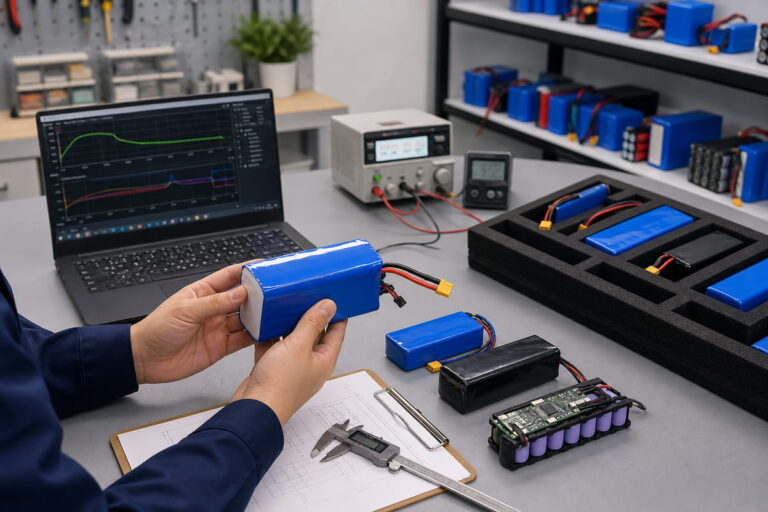
Prototype Custom Capacity Battery Packs

Test Your Battery Before Scaling Production

Prototype samples allow customers to evaluate:

  • Actual runtime
  • Physical fit
  • Battery weight
  • Charging performance
  • Product compatibility
  • BMS behavior

Nuranu can then make design adjustments before moving into larger production quantities.

Prototype Custom Capacity Battery Packs

OEM / ODM Custom Capacity Battery Manufacturing

From Capacity Requirement to Production

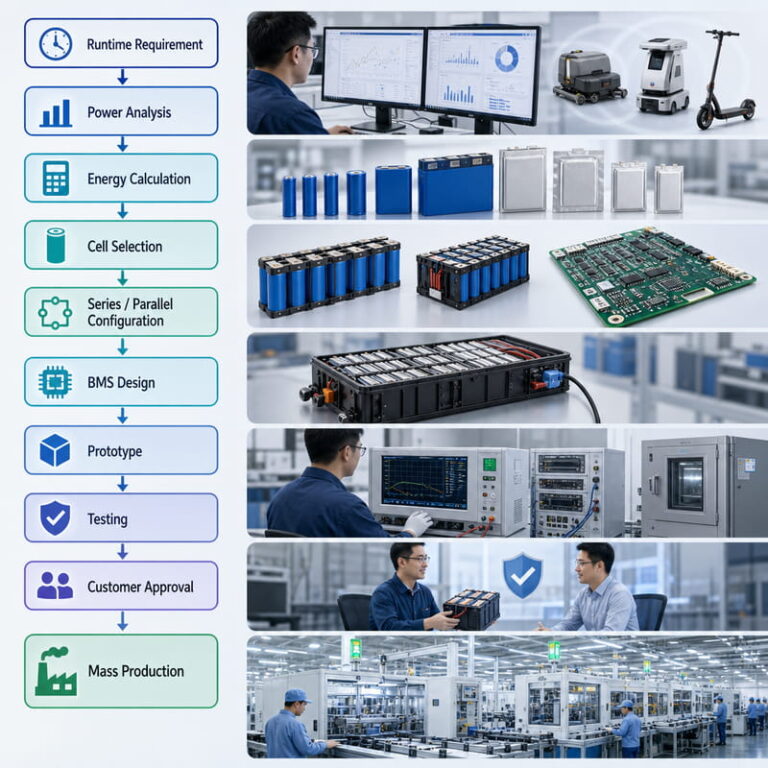
Nuranu provides end-to-end OEM/ODM battery manufacturing.

Runtime Requirement
     ↓
Power Analysis
     ↓
Energy Calculation
     ↓
Cell Selection
     ↓
Series / Parallel Configuration
     ↓
BMS Design
     ↓
Prototype
     ↓
Testing
     ↓
Customer Approval
     ↓
Mass Production

This gives customers a single manufacturing partner throughout the battery development process.

OEM ODM Custom Capacity Battery Manufacturing

Why Choose Nuranu Battery?

Application-Based Battery Design

We don't simply select a battery based on an Ah number. We consider the complete application.

Flexible Capacity Configuration

Battery capacity can be optimized through: cell selection, parallel configuration, battery dimensions and chemistry selection.

Engineering Support

If you don't know the exact capacity required, our engineers can evaluate your: product power, runtime target, voltage, current and available space.

Prototype to Mass Production

Nuranu supports: prototype battery packs, engineering samples, pilot production and OEM mass production.

Custom BMS Integration

Protection and monitoring functions can be integrated according to application requirements.

What Information Do We Need?

For a custom capacity battery quote, provide:

RequirementExample
Battery voltage14.8V
Required capacity10Ah
ApplicationCordless equipment
Runtime2 hours
Continuous current10A
Peak current20A
Maximum dimensions180 × 80 × 45 mm
Battery chemistryLi-ion
ConnectorExisting connector
BMSRequired
Quantity1,000 pcs

If you don’t know the required Ah rating, simply provide the product’s:

  • Power consumption
  • Required runtime
  • Voltage
  • Maximum battery dimensions

Nuranu can help evaluate the required battery capacity.

Custom Capacity Battery Pack FAQ

A custom capacity battery pack is a rechargeable battery designed to provide a specific amount of electrical energy according to the product’s voltage, runtime, current, and physical requirements.

Yes. Battery capacity can be customized by selecting suitable cells and configuring them in parallel according to the required capacity and current.

Yes. Nuranu can develop high-capacity lithium battery packs by optimizing cell selection and series/parallel configuration within the product’s size, weight, voltage, and current requirements.

A basic approach is to estimate required energy from power consumption and operating time:

Energy ≈ Power × Runtime

The final battery capacity should then account for voltage, efficiency, usable capacity, operating conditions, and other system requirements.

Ah describes electrical charge capacity, while Wh represents energy and incorporates voltage.

A simplified relationship is:

Wh ≈ V × Ah

Yes. Nuranu can design voltage and capacity together by selecting the appropriate series and parallel cell configuration.

Yes. Runtime is one of the key parameters used during custom battery design.

Provide the product’s approximate power consumption and required operating time, and our engineers can evaluate the battery capacity required.

Yes. Capacity can often be increased by adding cells in parallel while maintaining the same series configuration and nominal voltage, provided the resulting pack remains compatible with the product.

A higher-capacity battery does not automatically mean a higher voltage. However, the complete battery system must remain compatible with the product’s voltage, current, charging system, BMS, physical dimensions, and electrical requirements.

Yes. An existing battery can provide useful information about voltage, capacity, cell configuration, dimensions, connectors, and BMS requirements.

Yes. Nuranu supports prototype development, pilot production, and OEM mass manufacturing.

Need a Battery With a Specific Capacity?

Tell us your required Ah, Wh, runtime, voltage, current, or battery dimensions. If you don’t know the exact capacity you need, send us your product specifications and our engineers can help evaluate a suitable battery configuration.

Contact Form
Scroll to Top

Ask a Quote

Contact Form