
(No electrical engineering degree required.)
Let’s get real for a second. You’re here because commercial 12V lithium-ion packs cost a fortune. Or maybe you’re tired of lead-acid batteries dying after a year. Maybe you’re a solar tinkerer, an RV enthusiast, or just love DIY energy projects.
Whatever your reason: building your own 12V lithium-ion battery pack isn’t just possible—it’s empowering. I’ve seen beginners crank out reliable packs for under $100 using recycled laptop cells.
This guide? It’s your blueprint. As a professional lithium battery pack manufacturer, we’ll cover sourcing cells, nailing the wiring, avoiding fiery disasters, and everything in between. Safety goggles on? Good. Let’s dive in.
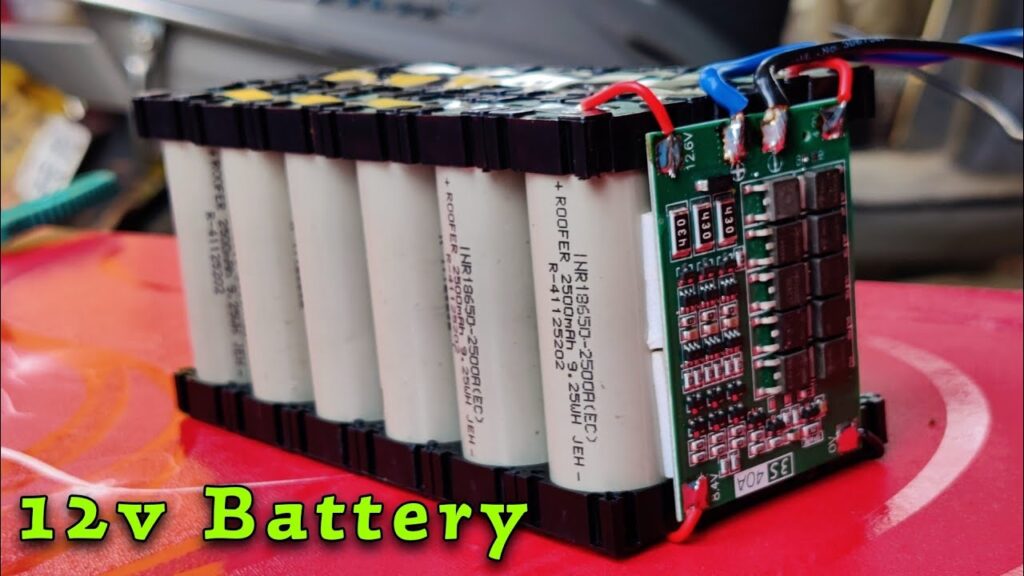
Why Build Your Own 12V Lithium-Ion Battery Pack?
Let’s cut through the hype. DIY lithium packs beat lead-acid in 3 ways:
- Cost ⚡️: Salvaged 18650 cells cost pennies vs. $150+ for pre-built packs.
- Longevity ⚡️: Lithium lasts 5x longer than lead-acid (2,000+ cycles).
- Weight ⚡️: A DIY 20Ah pack weighs 1.2 kg vs. 7 kg for lead-acid.
But here’s the kicker: Modern BMS tech makes this safer than ever. I’ll show you exactly how to avoid thermal runaway (think: less “fireworks,” more “reliable power”).
Considerations Before Battery Pack Building
Safety First: Non-Negotiables
Working with lithium isn’t like wiring a lamp. Skip these, and you risk flames:
- Fire Extinguisher: Keep a Class D (lithium-specific) extinguisher nearby.
- Spot Welder: Never solder cells—heat damages chemistry. A $60 spot welder is essential.
- Ventilation: Charge outdoors/garage. Off-gassing lithium is toxic.
- Gloves & Goggles: Spill electrolyte? It eats skin.
🛑 Red Flag: If you skip the BMS (Battery Management System), your pack will fail. The BMS prevents overcharge, over-discharge, and shorts—non-negotiable for safety.
Tools & Materials Checklist
Here’s everything you’ll need (with budget-friendly alternatives):
| Component | Purpose | Budget Option |
|---|---|---|
| 18650 Cells | Core energy storage | Salvaged from dead laptops ($0.50/cell) |
| 3S BMS (12V) | Protects cells, balances voltage | 40A Daly BMS ($15 on AliExpress) |
| Nickel Strips | Connects cells; low resistance | 0.15mm x 7mm pure nickel ($10) |
| Spot Welder | Secures strips without melting cells | Kweld ($160) or DIY capacitor mod ($40) |
| Casing | Insulates & protects cells | Repurposed lead-acid battery case ($0) |
| Multimeter | Checks voltage, continuity | Basic model ($20) |
| Ring Insulators | Prevents shorts on positive terminals | Barley paper rings ($2/pack) |
| Kapton Tape | Insulates connections | Heat-resistant polyimide ($8) |
🔋 Cell Note: Use matched cells (same model/capacity). Mixing brands = imbalance = fire. Test each with a $5 cell tester first.
How to Make a 12V Lithium-Ion Battery Pack?
Step 1: Configuring Your Battery Pack (3S? 4S? Let’s Math It)
Lithium cells run at 3.7V nominal. To hit 12V, wire 3 in series (3S). But “12V” is a label:
- 3S Voltage Range: 9V (empty) → 12.6V (full).
- Problem: Some devices (e.g., car starters) demand true 12V+. Fix? Switch to LiFePO4 (4S = 12.8V) or boost converters.
Capacity Math
Want 20Ah? For a 3S7P pack (3 series, 7 parallel):
- Total Cells = 3 × 7 = 21 cells.
- Capacity = Single cell Ah × 7 (e.g., 2.9Ah × 7 = 20.3Ah).
💡 Pro Tip: Salvaged cells often test at 80% original capacity. Derate accordingly.
Step 2: Assembling the Battery Pack (Spot Welding Demystified)
A. Cell Arrangement
Arrange cells in a 3×7 grid. Physical separation is CRITICAL:
- Spacers: Plastic honeycomb grids (if space allows).
- No Spacers? Use double-sided tape between cells (← my go-to).
- Insulate positive terminals with barley paper rings.
B. Spot Welding Nickel Strips
- Set welder to 60J per weld (adjust per strip thickness).
- Weld parallel rows first (all “+” to “+”, “-” to “-”).
- Weld series connections: Row 1 negative → Row 2 positive → Row 3 negative.
- Test continuity—ANY short = disassemble & redo.
⚠️ Never solder lithium cells 🔥
Solder heat hits 200°C+; cells degrade at 60°C.
Step 3: Wiring the BMS (Your Pack’s Brain)
The BMS saves your pack from:
- Overcharge (>4.2V/cell)
- Over-discharge (<2.7V/cell)
- Short circuits
Wiring Diagram (3S Configuration):
Battery Terminal → BMS (P-)
BMS (B+) → First Cell +
BMS (B1) → Junction Cell 1 & 2
BMS (B2) → Junction Cell 2 & 3
BMS (B-) → Last Cell -
Solder wires to nickel strips—not cells! Too much heat = damaged separator = 🔥.
Step 4: Encasing & Testing
The Housing Hack
Got an old lead-acid battery? Hollow it out:
- Drain acid (neutralize with baking soda + water).
- Cut open top with a hacksaw.
- Rip out partitions with tin snips.
Secure Your Pack Inside:
- Wrap in Kapton tape (prevents shorts).
- Fill voids with cardboard or foam.
- Seal with epoxy (not duct tape!).
Testing Protocol
- First Charge: Use a 12.6V lithium charger at ≤0.5C (e.g., 10A for 20Ah pack).
- Voltage Check: Each cell should hit 4.2V ±0.05V.
- Load Test: Hook to a 12V spotlight. Voltage shouldn’t dip >0.5V under load.
🧪 Reality Check: Found your pack swelling/shrieking? Disconnect. A BMS failure could mean incompatible charger voltage.
Real-World Case Study: The $40 Solar Battery
Inspired by Chhanda_Das’s DIY triumph:
- Cells: 21 salvaged 18650s (mix of LG/Murata @ 2.9Ah avg).
- Capacity: 17.05Ah (vs. lead-acid’s 7.5Ah).
- Cost: ₹650 ($8) for BMS + nickel strips. Cells = $0.
- Solar Use: Powered a 50W panel + 30W fan/light for 16h/day.
Key Hack: Used a dead UPS lead-acid case for instant “drop-in” compatibility.
Common Beginner Traps (Avoid These!)
- Ignoring Cell Matching → 50% capacity loss.
- Skipping Capacity Testing → Weak cells overheat under load.
- Cheap BMS → No over-temp protection = thermal runaway.
- No Insulators → Vibration-induced shorts.
📉 Voltage Reality: A “12V” lithium pack averages 11.1v. For true 12V systems (automotive), LiFePO4 (4S) is better. Nominal 3.2V/cell × 4 = 12.8V.
Final Thoughts: Is DIY Worth It?
How to make a 12V lithium-ion battery pack isn’t just technical specs—it’s about self-reliance. Yes, sourcing cells takes hustle. Yes, spot welding demands patience. But at $0.50 per watt-hour? You’ll crush retail pricing while learning priceless skills.
Remember:
- Safety isn’t optional (BMS + spot welder = non-negotiable).
- Salvage cells—but test every one.
- 3S = 12V-ish. Upgrade to LiFePO4 for strict 12V needs.
So—ready to build your own Tesla-grade battery? Exactly. 👊
 English
  German
  Spanish
  French
  Italian
  Portuguese
  Polish
  Russian