








Lithium-ion batteries power many of our everyday devices, from laptops and phones to electric vehicles. However, as these batteries age and degrade, they become more susceptible to failure modes like thermal runaway that can lead to fire. So will old lithium batteries easily burn?
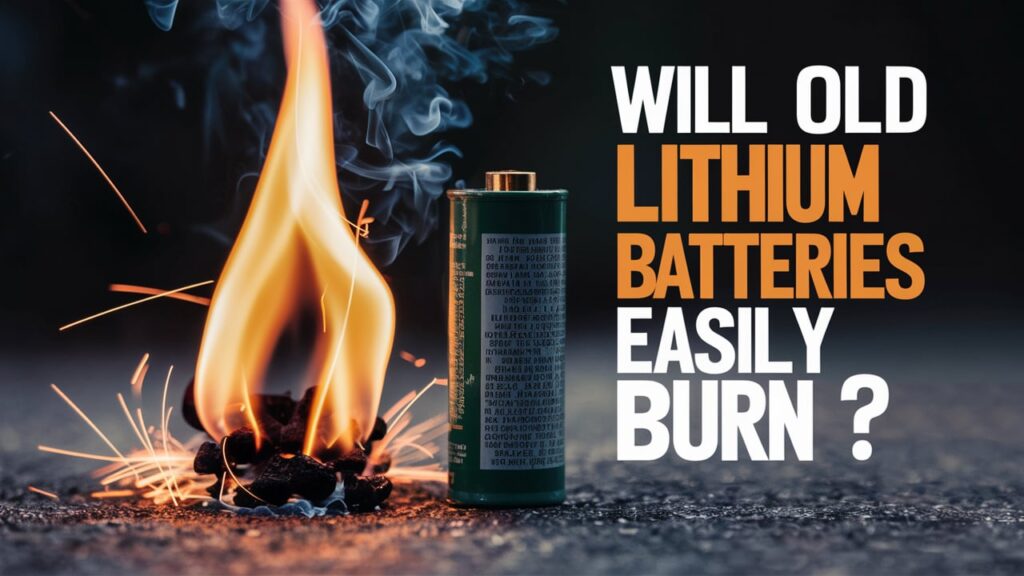
Will Old Lithium Batteries Easily Burn?
The short answer is yes – old lithium batteries can absolutely pose a higher fire risk.
As lithium-ion batteries go through charge/discharge cycles over months and years, changes take place internally that reduce their stability:
- The electrolyte liquid that allows lithium ion flow slowly degrades with time. Impurities start forming that can interfere with proper functioning.
- Electrodes like the anode and cathode experience slow corrosion. This leads to damage of structural integrity, causing electrical shorts.
- The separator membrane that keeps the anode/cathode from touching also slowly decays. If it fails, the battery short circuits.
All these aging mechanisms come together to make thermal runaway incidents more likely in older batteries:
What is Thermal Runaway?
Thermal runaway refers to a dangerous feedback loop inside failing batteries.
Due to factors like internal shorts, corrosion etc., the battery starts overheating at one spot. This heat then spreads to adjacent regions.
The previously normal battery regions now also start overheating due to this spreading heat. This causes even more battery damage and more heat release.
Left unchecked, the above cycle continues till the entire battery is consumed in the reaction. Such uncontrolled heating leads to fire and even explosion.
Thus, aged lithium batteries with pre-existing flaws are at higher risk of entering thermal runaway due to their weakened internal structures.
Signs of an Aging Lithium Battery Prone to Failure
As lithium batteries degrade, they display common signs that act as warnings before possible overheating events occur:
1. Reduced Runtime and Capacity
Brand new lithium batteries run for their full rated runtime when fully charged. However, as they age, their capacity keeps decreasing.
You’ll notice your device running out of juice much faster even though the battery indicator shows a full charge. This capacity loss is due to gradual failure of internal battery components.
2. Longer Charging Times
Along with faster discharge cycles, aging lithium batteries also start taking longer to recharge fully.
Charging lithium ion cells is a delicate balancing act. The charger has to maximize capacity filled while avoiding overcharge damage.
In older cells, higher internal resistance slows down the charging process. If the aging also causes electrode flaws, charging getssluggish.
Thus, unusually long charge times indicate your battery needs replacement.
3. Swelling and Deformation
The compact rectangular shape of lithium cells comes from the stable electrode stack and strong outer casing.
However, corrosion and impurity buildup over time leads to expansion in volume internally. This expands against the casing, causing visible swelling distortion.
If you notice the battery pack slightly pushing against your device chassis, get it checked ASAP before thermal issues emerge.
Best Practices: Using and Charging Aged Batteries Safely
While battery failure can never be fully avoided as lithium cells age, you can take steps to minimize fire risks:
1. Follow Manufacturer Recommendations
Reputable battery makers conduct extensive testing to formulate usage guidance. Sticking to their advised charging/operation procedures ensures you remain in the safe operating zone.
Follow all limits on charge voltages, maximum device power draw and operating temperatures. Staying within these bounds minimizes overheating triggers.
2. Charge in a Non-Flammable Surface
It’s best practice to always charge lithium batteries on non-flammable surfaces like granite kitchen countertops. This prevents fires from spreading if a faulty battery fails.
Also ensure you don’t place any flammable materials nearby when charging just to be safe.
3. Stop Usage if Signs of Failure Appear
Immediately stop using a lithium battery that shows swelling, temperature spikes, abnormal discharge or other anomalies.
Such behaviors often precede catastrophic failures. Retire such cells safely per battery recycling regulations in your country.
Don’t attempt to revive failing batteries as that greatly magnifies fire risks. Buy replacement cells/devices instead.
4. Don’t Leave Batteries Discharged
While keeping lithium cells at 100% charge also accelerates aging, the opposite extreme (0% charge) can also be hazardous.
Discharged cells tend to accumulate metallic lithium deposits internally that are highly unstable. Avoid leaving lithium batteries fully drained for too long.
Conclusion
In summary, aged and degraded lithium ion batteries pose substantially higher fire safety issues compared to fresh cells.
Common failure mechanisms like electrolyte dry out and metallic corrosion increase instability over time. This magnifies risks of uncontrolled heating i.e. thermal runway.
However, users can manage lithium battery fire risks by following usage guidelines, minimizing charge levels/environmental extremes and retiring cells at the first sign of abnormalities.
So be vigilant about battery aging behaviors in your devices. And replace cells showing odd electrical/physical changes ASAP before you end up with a failing battery prone to burning!