








I often get asked “How long should I charge my 18650 battery?”. And I gotta say – it’s a fair question.
After all, 18650 batteries are SUPER popular these days. You find them everywhere from flashlights and vaporizers to cordless tools and even electric cars.
Which means that properly charging these cylindrical lithium-ion cells is a must if you want your devices to work as expected.
In this updated guide for 2025, as a professional 18650 battery pack manufacturer, we’ll cover everything you need to know about 18650 charge times including:
- What impacts the 18650 charge time
- How fast you can charge 18650 batteries
- Tips for safer and faster charging
- And much more
Let’s dive in…
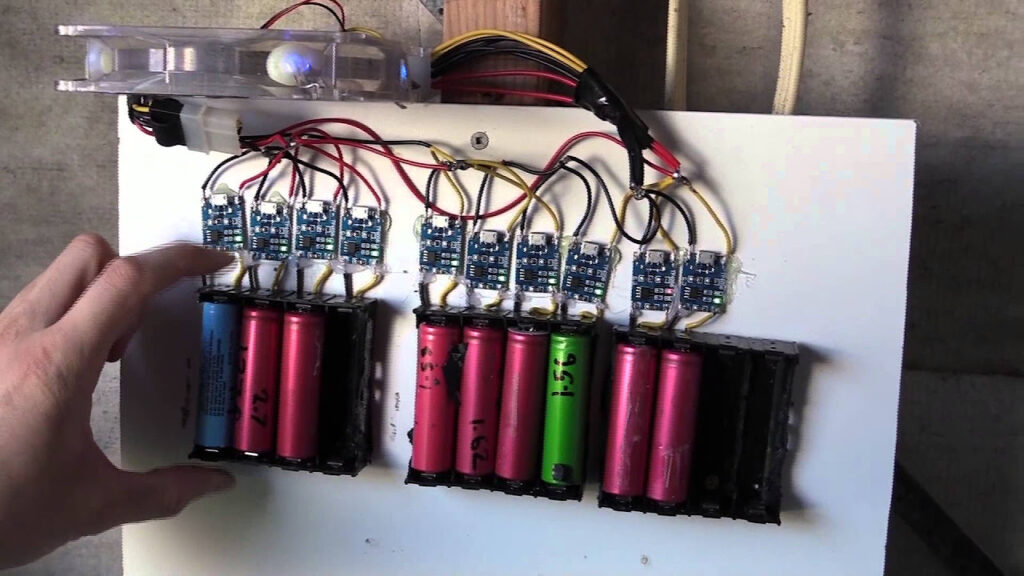
What Impacts Your 18650 Battery Charge Time?
As with all batteries, there are a handful of factors that determine how long it takes your 18650 to reach a full charge:
1. Battery Capacity
Battery capacity is measured in milliamp hours (mAh). The higher the number, the more “juice” a battery can hold.
For example, a high capacity 3500mAh 18650 battery is going to take longer to charge than a lower capacity 2200mAh battery.
Simply put – there’s more energy to “fill up”.
As a rule of thumb, it takes about 1 hour to charge an 18650 battery at 1C (rated capacity). So a 3000mAh battery will take roughly 3 hours to charge at a 1C rate.
2. Charging Current
The charging current – how many mA or amps your battery charger outputs – plays a massive role in charge times.
Charging at a lower current delivers a “trickle charge” which takes longer…but is better for battery life span.
Cranking up the amps lets you charge faster. But at the expense of capacity and cycle life.
Most 18650 chargers offer between 0.5A to 1A output. This keeps charge times reasonable while maximizing overall battery performance.
3. Charge Level
It takes progressively longer to charge a lithium-ion battery the closer it gets to 100%. This concept is referred to as “saturation” – there’s less and less room for the lithium ions to move around.
What does this mean in real life?
You’ll see faster charge times when “topping off” a partially charged 18650 vs trying to cram a completely dead battery full of electrons.
This is why the last 20% often takes longer than the first 80%!
How Fast Can You Charge 18650 Batteries?
Now let’s talk specifics.
What is the fastest possible way to charge an 18650 battery?
And how can you balance performance versus battery health?
Maximum Charge Rates
Most 18650 datasheets provide a maximum charge rate, usually between 1C and 4C.
This means a 3000mAh battery can safely accept a charging current between 3000mA and 12000mA.
But just because you can charge that fast doesn’t necessarily mean you should.
Higher charge rates generate extra internal heat which accelerates capacity fade. You’ll get lower cycle counts as bits of the cathode decompose from temperature spikes.
So only use the maximum charge rate when you absolutely NEED the quickest charge possible. And don’t make a habit of it.
Ideal Charge Rate
Between 0.5C and 1C offers a good blend of safety, speed, and battery endurance.
Charging at 0.5C roughly doubles the rated cycle life compared to 1C rates. But still charges faster than ultra-conservative 0.1C trickle charging.
Most 18650 chargers sit around 0.5C to 0.7C for precisely this reason.
Plus, staying in the ideal charge window keeps surface temperature increase to a minimum. Prolonging the usable lifespan of your cells.
Quick tip: Don’t charge 18650 cells below freezing or over 120°F. Extreme temperatures hinder performance and damage the internals.
How Long Does it Take to Charge 18650 Batteries?
Now let’s run some numbers. Approximately how long should you expect it to take when charging common 18650 battery sizes?
All runtimes below assume a charging rate between 0.5C and 1C.
- 2200mAh – 2 hours 20 minutes
- 2600mAh – 2 hours 35 minutes
- 3000mAh – 3 hours
- 3500mAh – 3 hours 30 minutes
- 4000mAh – 4 hours
Bear in mind age, charge cycles, temperature fluctuations, and other factors can impact actual charge duration. The rates above are for healthy cells charged under ideal conditions.
5 Tips For Faster and Safer 18650 Charging
I want to wrap things up with a few quick pro tips that’ll help you safely reduce 18650 charge times:
1. Use An External Charger
Flashlights, vapes, or other devices that charge 18650s internally often use lower amperage USB ports. Which drags out charge duration substantially.
An external smart charger gives faster, safer charging. And many advanced models provide detailed voltage and internal resistance data. So you can better track cell health.
2. Charge At Room Temperature
Try your best to charge batteries around the 70°F mark.
Hot or cold ambient temps slow the movement of ions which increases charge times. Plus extreme hot/cold accelerate aging and damage.
3. Don’t Over Discharge
Deeply discharging 18650s below 2.5V causes leaks and internal shorts as dendrites form. Severely reducing cycle counts in the process.
Recharge cells once they dip below 3.2V-3.4V for maximum performance and safety.
4. Use The Right Charger Current
We touched on this earlier. But choose a charger that supplies 0.5C to 1C for the best blend of speed and longevity.
5. Don’t Overcharge
Overcharging generates excess heat and pressure. Which – in a worst case – can literally blow your battery up.
Use a smart charger that automatically stops applying current once cells hit 4.2V. And try not to exceed 8 hours max charging time.
18650 Charge Time FAQs
Let’s wrap up by answering some of the most common questions about 18650 charging:
Does Charging 18650s Overnight Hurt Them?
Overnight charging is generally fine assuming you use a smart charger that stops when the cells are full. Just make sure batteries don’t overheat if tucked away in a bag or device.
And know that small “top off” charges reduce overall lifespan compared to full discharge cycles.
How Many Times Can You Recharge An 18650 Battery?
The average 18650 lithium ion battery lasts 300-500 full discharge cycles. High performance cells deliver 600+ cycles.
Proper storage, avoiding over discharge/charge, and operating within temperature limits maximizes overall longevity.
What Should You Do With Dead 18650 Batteries?
First – make sure they’re actually “dead” dead. And not just discharged below operating voltage. Give seemingly dead cells a good long attempt at charging just in case.
If they refuse to take a charge, follow local regulations and bring to appropriate recycling centers. Never throw lithium batteries in normal trash.
Can External Chargers Be Left Plugged In?
Smart chargers stop applying current when a charge completes. So leaving them plugged in is technically OK and won’t hurt your batteries.
Buuut…it’s still advisable to unplug chargers when not actively charging cells. Just as a basic precaution in case the safety features fail.
How Can You Tell If An 18650 Is Fully Charged?
Check voltage with a multimeter. Fully charged 18650s clock in between 4.1V and 4.2V depending on the specific chemistry. Waiting for the charger to indicate full charge works too.
If resting voltage rapidly drops below 4V, however, that likely indicates a faulty or damaged cell. Or the protection circuit was tripped from over discharge.
Wrap Up
And there you have it. Everything you could possibly want to know about 18650 charge times.
From ideal charge rates…to the factors that impact charging…to basic safety tips.
Of course, I probably missed a thing or two. Or you might have another question pop into your head.
So drop a comment down below if there’s anything else you want to get to the bottom of when it comes to 18650 battery charging.