








The 18650 battery has become incredibly popular for powering everything from laptops to power tools. But charging 18650 batteries safely is critical. Using the wrong type of charger (or no charger at all) can be extremely dangerous and result in battery damage or even explosion and fire.
So what do you do if your 18650 battery runs out of juice and you don’t have an 18650 battery charger on hand? As a professional 18650 battery packs manufacturer, I’ll walk you through several methods for how to charge an 18650 battery without a charger so you can revive your dead battery and avoid getting stranded without power.
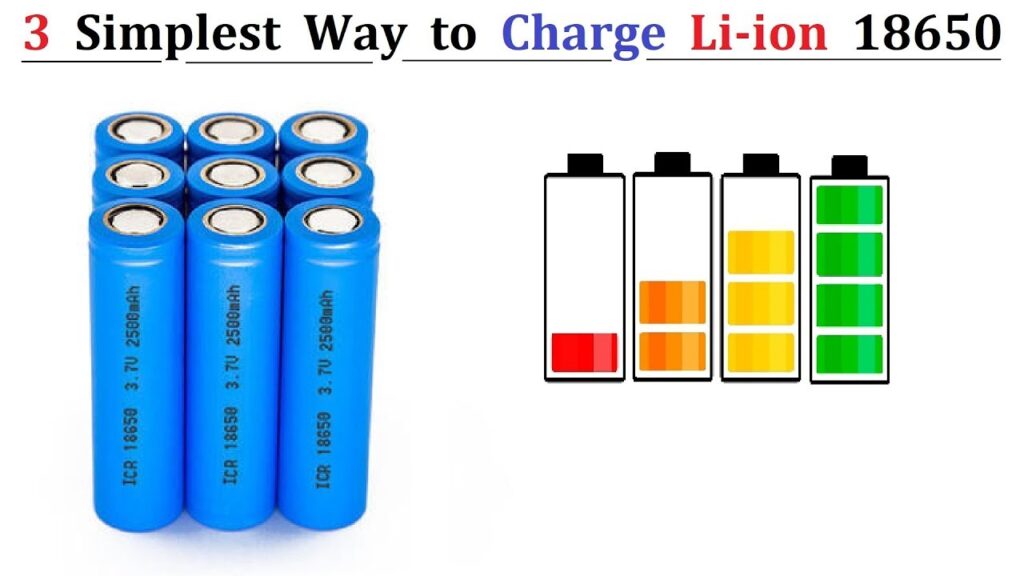
Can You Charge an 18650 Battery Without a Charger?
You absolutely can charge an 18650 battery without a dedicated lithium-ion battery charger. However, I only recommend doing so in an emergency when you have no other option.
Charging lithium-ion batteries is very complex. 18650 chargers are designed specifically to provide the proper voltage (4.2V), regulate current flow, and cutoff when fully charged. This prevents overcharging and damage.
Trying to rig up some type of DIY charging system means you lose all those safeguards. Overcharging or heating up lithium-ion cells can cause bulging, explosion, fire and injuries.
So while the methods below will work, only use them as an emergency last resort. Investing in a quality 18650 battery charger is worth avoiding catastrophic failures or burning your house down!
How to Charge an 18650 Battery Without a Charger?
Emergency Method #1: Charge With Another Battery
My first recommendation for charging a dead 18650 in a bind is using another fully charged battery. Here are the steps:
What You Need
- Fully charged 18650 battery
- Dead 18650 battery
- 18650 battery holder
- Small neodymium magnets
How to Do It
- Verify your “donor” 18650 battery is fully charged. Use a voltmeter to check voltage if unsure. Should be around 4.2V when fully charged.
- Insert magnets on the positive and negative terminals of each battery. This makes the connections easier and prevents short circuits from direct contact.
- Insert both batteries into an 18650 battery holder, ensuring proper polarity alignment. The positive terminal of one battery must connect to the negative terminal of the other.
- Leave batteries connected for 30-60 minutes. This allows just enough trickle current to partially revive the dead cell.
- Check the voltage of the dead battery. Repeat steps 3-4 until the battery reaches 3.2-3.7V.
- Once the revived battery holds steady voltage, remove batteries and charge normally with 18650 charger.
The key things to remember when using this method:
- Fully monitor the process to prevent overcharging
- Only connect batteries for brief periods to prevent damage from excessive heat
- Don’t leave batteries unattended as explosion risk increases substantially
While not ideal, battery-to-battery charging does work to resuscitate an overly discharged 18650 when no other options exist. Just take precautions and stop immediately if you notice any bulging, odd smells or excessive heat generation.
Emergency Method #2: USB Charging
Another way to provide power to a depleted 18650 battery without a dedicated charger is via USB. While USB ports only supply 5V, this lower voltage is safer compared to alternatives. Here is what you need to know:
What You Need
- Depleted 18650 battery
- USB-A to DC barrel plug cable
- DC-DC buck converter module
- 18650 battery holder
How to Do It
- Set buck converter to 3.7V output voltage. This matches the nominal voltage for a single lithium-ion cell.
- Connect the buck converter input to a USB port using the USB-to-DC cable. This provides 5V input voltage.
- Connect converter output to an 18650 holder using jumper wires. Pay attention to polarity.
- Insert the depleted 18650 battery into the holder, ensuring proper alignment with converter output.
- Enable the buck converter. This starts charging the 18650 battery via stable 3.7V DC power.
- Monitor temperature and voltage, disabling charging if cell gets hot or reaches 4.2V.
The nice thing about using a buck converter is the 3.7V DC output matches perfectly with 18650 cell chemistry. Just be sure to monitor the process and disengage charging when the battery is fully revived or gets too hot.
Never leave 18650 cells unattended during charging! The USB method does provide a safer approach but lithium-ion batteries can still be volatile.
Emergency Method #3: The Joule Thief
My final recommendation for charging an 18650 battery without a charger is a Joule Thief circuit. This simple (yet ingenious) circuit can extract every last bit of energy from any battery.
To understand how a Joule Thief works, we first need to cover the key components:
Toroid Core – Ferromagnetic donut that concentrates and multiplies magnetic fields
Primary Winding – Thin wire wrapped around donut 6-8 times
Secondary Winding – Thicker wire wrapped around donut 80-100 times
Transistor – NPN type (e.g 2N2222) controls current flow
Resistor – Limits current to prevent component damage
LED – Adds load to convert low voltage to electricity
In operation, the Joule Thief efficiently converts residual energy in a “dead” battery to useful electricity. As the battery dies, output voltage drops dramatically while current stays relatively high.
The Joule Thief continues converting this idling current by rapidly pulsing the transistor on/off. This induces voltage multiplication in the secondary winding capable of lighting an LED.
By adding the depleted 18650 battery to this circuit, you can eke out enough current flow to slowly recharge the cell. Just monitor the process and disconnect when fully revived.
Joule Thief chargers are cheap to build and handy for off-grid power situations. They allow practically any battery chemistry to be reused many more times before recycling. Just take precautions when charging lithium-ion cells given the risks.
Final Thoughts
Learning how to charge an 18650 battery without a charger opens many off-grid power possibilities. Just remember that lithium-ion cells can be volatile so take necessary safety precautions. These emergency charging methods detailed above should ONLY be used in a bind.
Investing in a quality 18650 lithium-ion charger is still highly recommended for regular charging and prolonging cell lifespan. Never charge batteries unattended regardless of the charging method.
Hopefully these 18650 charging techniques help you get out of a jam when your lithium-ion cells run dry and you lack a proper charger. Stay safe and monitor charge levels diligently! Let me know if you have any other battery charging survival tips in the comments.